Being quiet with other people
Being under exam conditions means no talking, raising your hand for attention, invigilators quietly pacing the rows of desks, hushed whispers when something happens. My current day job is in exams administration for a medical school, so I spend a fair amount of time under exam conditions. When I was at university twenty five years ago, the soundscape was different: added to the base layer of coughs, whispers and the general background hum of the building were pens scraping and papers turning. The most recent exams I’ve been working on are taken on the computer: multiple choice questions, one hundred per paper, delivered to each student in a random order. The room is mostly filled with dispersed but continual mouse clicks, and occasional typing. Standing at the front of the room I have a big responsibility: logged into the exam delivery platform I can begin and end the assessment for all the students simultaneously with a single mouse click. It feels strange and uncomfortable.
Under exam conditions all of us – 90 students, a handful of invigilators and myself – maintain a tense silence. The atmosphere in the room is heavy, oppressive. There’s lots at stake here, both for the students to perform well and for myself and the other staff to resolve any potential issues. There is no second chance (at least until the resits). The attributes of this type of silence come from a number of factors. It’s mandatory rather than entered into voluntarily. It’s policed, enforced (and I’m one of the screws). Breaking the silence potentially has major consequences.
I recently visited my local town hall for the first time. Our local Green Party took thirty one seats at the recent local elections, from previously having zero, and I was invited as a party member to attend the opening ceremony for the new cohort, and the changing of the mayor. The machinery of the state – both political and judicial – normally happens apart from daily life. Unless you are required in court, as a defendant, witness or worker, or have some power or administrative role in politics, there’s little reason to attend. These spaces where things happen, where decisions are made, feel different to the spaces we inhabit day to day. There’s a reverence like in a place of worship, but its directed towards authority not the divine. At the town hall the session began with the ceremonial presentation (more of a ‘bringing in’) of the sceptre. The councillors below and us public in the viewing gallery above all stood, silent. Being quiet here with a hundred or so other people amplified the ceremonial power and the significance of the moment. Behind me, two teenagers commented that the moment needed some music – a fanfare or …something… to mark the significance.
The optimum situation in which a group of people maintain silence, for me, is in a large library reading room. Visiting the upper floors of the British Library for the first time, I was almost giddy with the sensation: dozens of people, all industriously working away, individually focused but together in the space, maintaining quiet for themselves and one another. Yes, there is some coughing, there are typing sounds, pages turning, whispered conversations at the far end of the room. But this subtle cacophony emphasises how much other sound is missing, how much louder it could be if the active quiet were not maintained. In a library the quiet is still policed, through mutual adherence and herd mentality as much as top-down control. But there is no mandatory attendance, we choose to be there and accept the rules as part of our use of the space. My favourite library reading room is in Manchester Central library. The large, round room with a high ceiling and marble floors has a strange echo-reverb. Drop your pencil on the desk (accidentally, of course) and there’s a slapback echo almost half a second later. Every small sound in the room is processed by the space – the resultant soundscape is unique and mesmerising.
Over the years I’ve attended and played many quiet performances. Most recently, working with Sam Underwood, whose solo work with ams (acoustic modular system) is unamplified, and with our collaboration the Mammoth Beat Organ which is also all acoustic. We tend to start our set very quietly and build up to more rhythm and noise. At this set (youtube link) an audience member comedically broke the silence by applauding after the first note we played. I’ve played other improv shows where drunk people have interrupted in quiet sections, with what felt at the time like a more combative or unfriendly intent. Quiet gigs require a much stronger communal sense of commitment to the atmosphere. The silence is enforced only by two factors: the majority’s voluntary joining with the social contract of the performance space, and the perhaps sceptical minority of people pressured into being quiet by the situation created.
I don’t always enjoy participating in quiet gigs. Set and setting play a huge role, and under the wrong circumstances, a consensual quiet atmosphere can still feel oppressive. On a bad day your body might betray you. The silence shines a spotlight on any extraneous sound, and my guts aren’t always fully under my control. I’m reminded of being a school kid, trying and failing to keep in farts in a packed assembly hall. Even before any thing has happened, the all-consuming dread rises, the fear of the intense shame and embarrassment, burning flames and full spectrum buzzing rising through my body, filling my head. Luckily that’s less common nowadays.
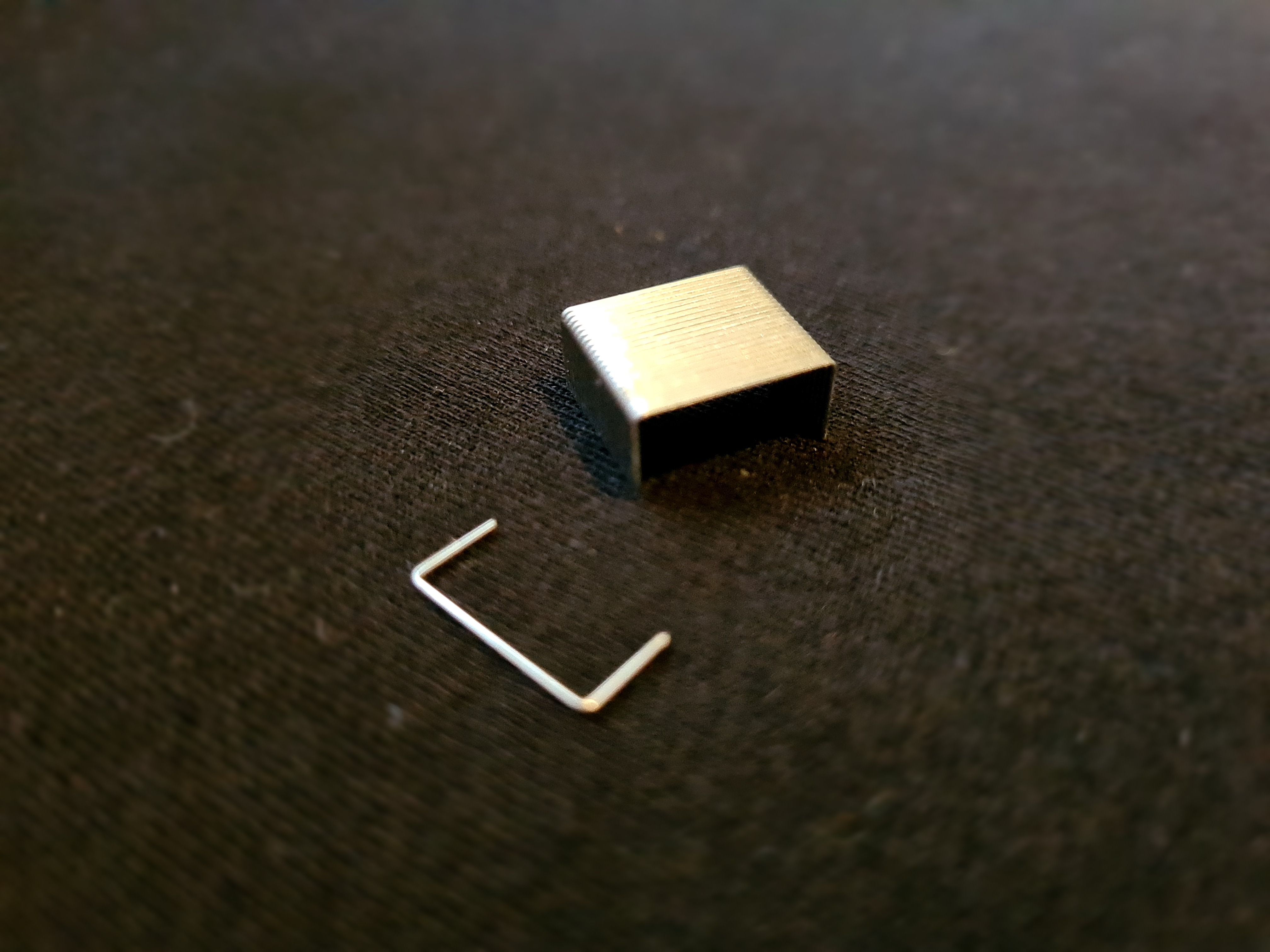
The quietest sound I’ve ever experienced in a performance still gives me goosebumps to think about. John Macedo played a set in Toynbee Hall, a Victorian institution which, amongst other things, trained the street urchins of Whitechapel for the military. The upstairs room in which John performed was set out like a sort of courtroom. We were all on wooded pews in close proximity around his equipment, John at the head of the table position, an audience of perhaps twenty people in two rows, close-in along the sides of the performance area. There were multichannel speakers around the room which John was distributing electronic sounds to; several speaker cones in the centre of the space/audience, pointing upwards, allowing John to fill them with different things (rice, shredded paper) then vibrate the items with low frequency waves; and numerous other objects that John played manually and acoustically. With flowing sections and variations in sound level, timbre, spatial distribution and intensity, the performance narrowed down to a very focused silence. The space itself was quiet, shielded from the external sounds of the city by thick stone walls, and as our attention focused in the low light I was aware I could hear people’s breath all around me. Crouched over the black-clothed surface, John placed a clump of staples standing on their legs, like a miniature table. We were all holding our breath by this point. With a single staple John gently stroked the ridges along the back of the staples a few times – the sound was like a ‘croaking frog’ percussion instrument but on a microscopic scale. The sound was so quiet, yet the focal point of such intense concentration and attention. I’ve never experienced anything like it.
Being quiet with other people can still be one of my favourite situations to be part of, but the circumstances need to be right and there are lots of factors to consider. Standing at the front of the exam room, as I now do regularly as work requires it, I try to appreciate the quietness and the strange soundscape that surrounds me.
 Graham Dunning
For some reason this brought to mind Blaise Pascal’s “All of humanity’s problems stem from man’s inability to sit quietly in a room alone.”
Or if you prefer “Tout le malheur des hommes vient d’une seule chose, qui est de ne savoir pas demeurer en repos dans une chambre.” because every philosophical statement sounds deeper in French.