Adding some outputs
I made a couple of adaptions to my modular this week, both involving adding new outputs. First, external connections for the spring reverb module. And then a stereo pair of balanced outputs for the main modular.
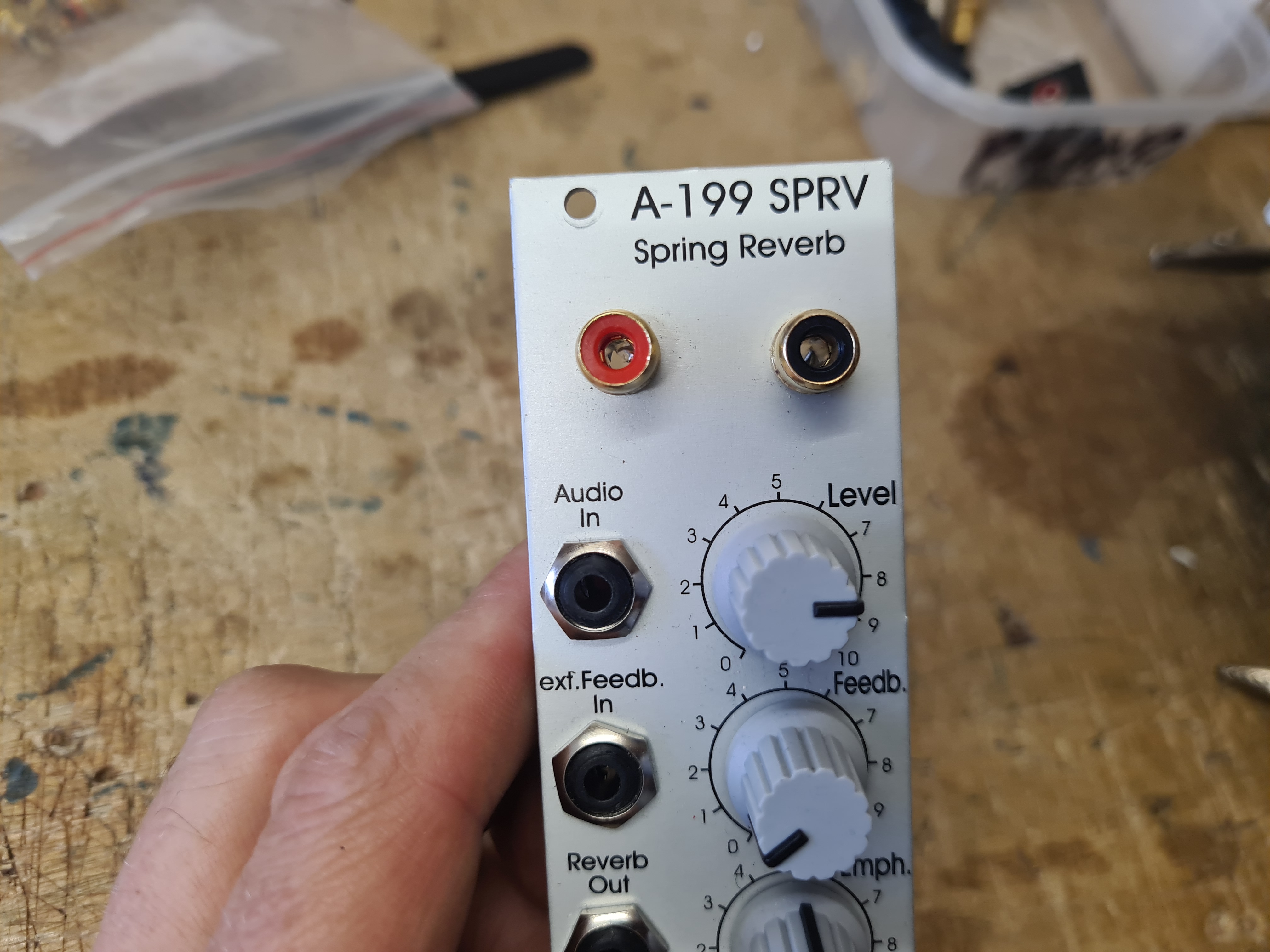
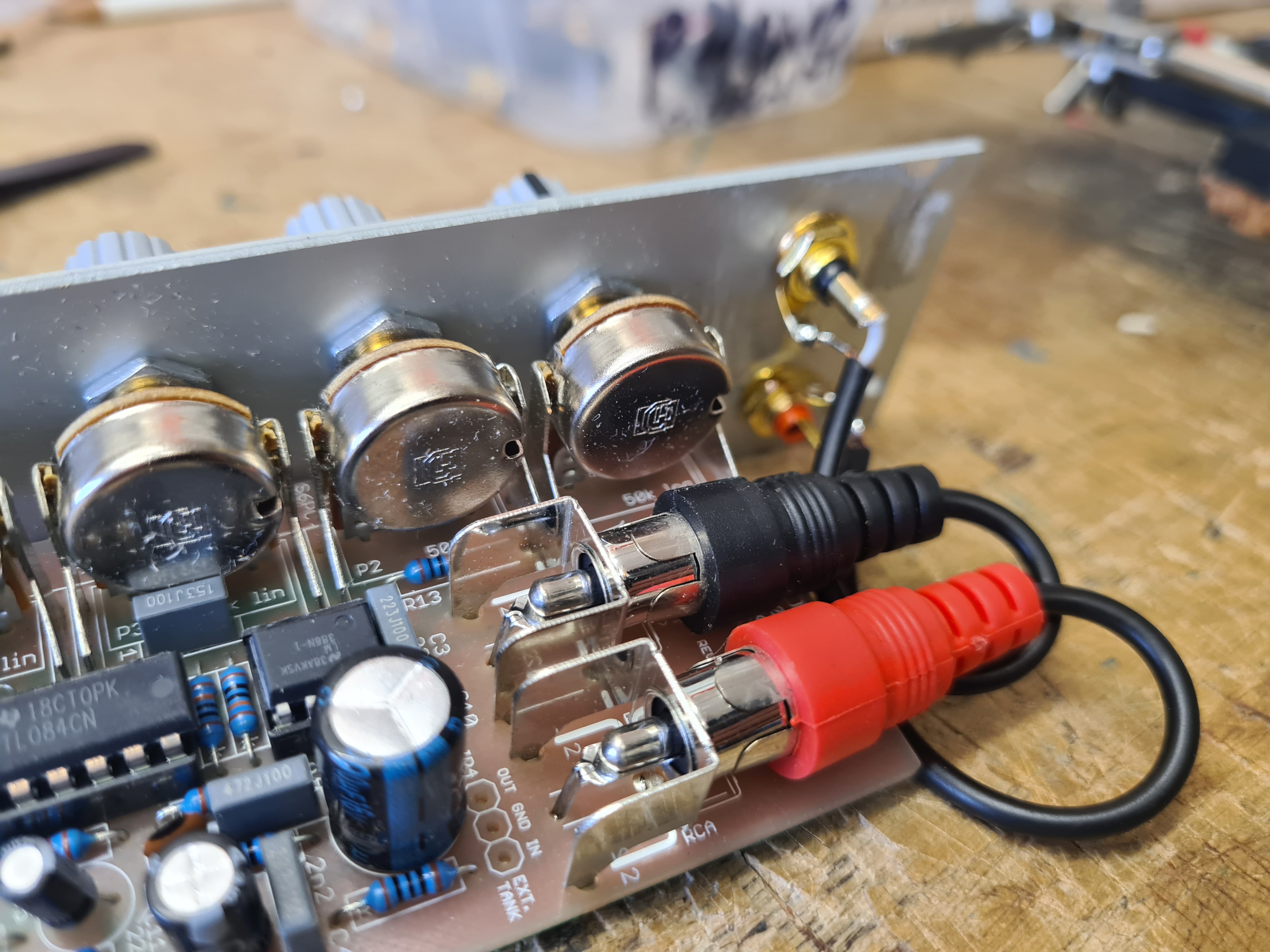
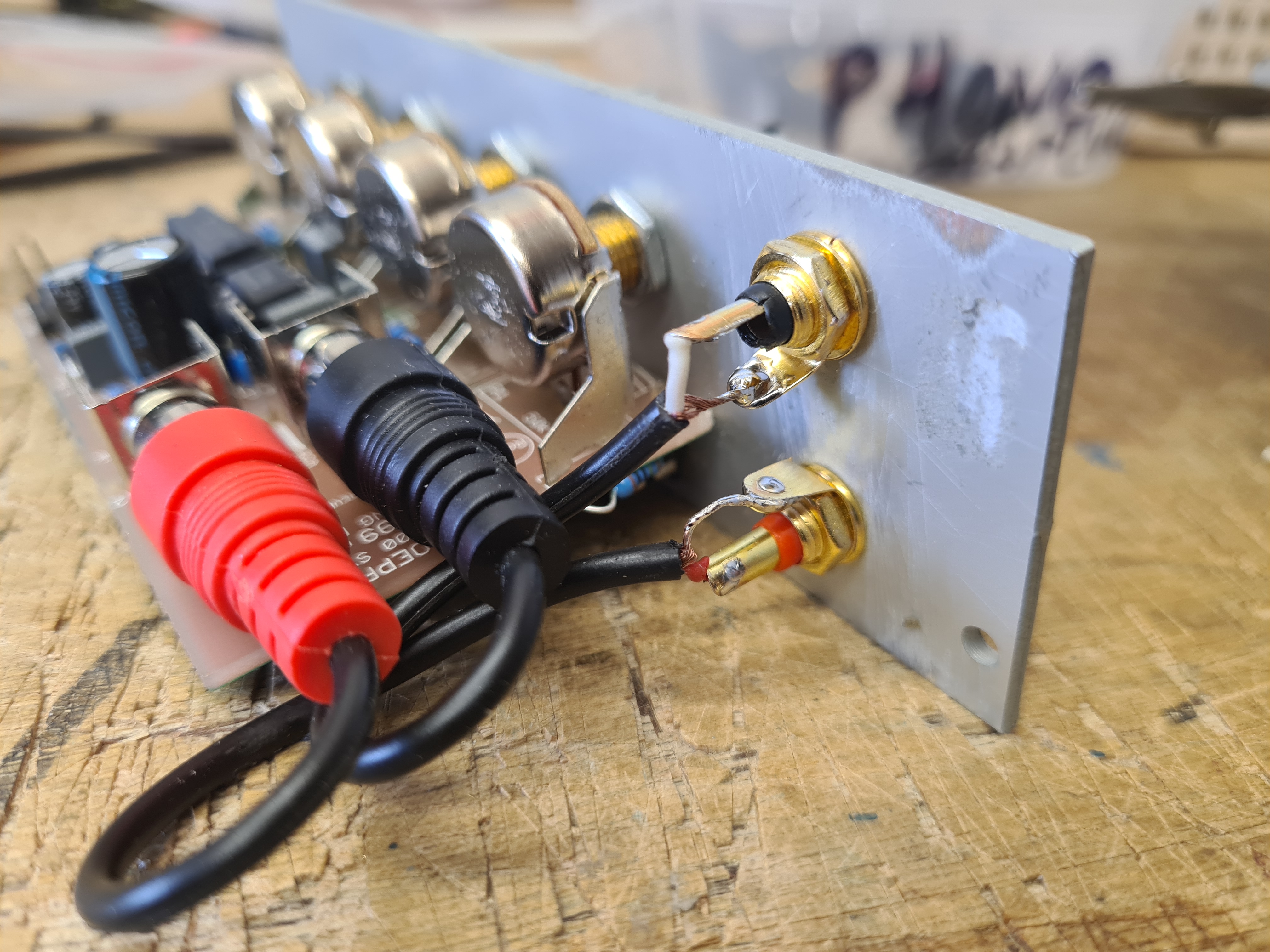
The Doepfer A-199 SPRV is a basic spring reverb module that comes with a mini reverb tank. It’s quite basic compared to some other brands, but also reasonably priced, and includes the main feature I was interested in: feedback control. With my setup I have a basic resonant bandpass filter plugged into the feedback chain, which means I have some control over what frequency it goes off at. The other reason I wanted a spring reverb in my improvising setup was the tactile nature of the effect – you can bash the springs, damp them with foam, fingers or magnets, and otherwise physically manipulate them for a variety of effects. The Doepfer module uses an external tank, but the cables are round the back of the module, on the inside, as it’s really intended that the tank is hidden away inside your case somewhere. Luckily there’s a decent amount of space on the front panel, so I added a couple of RCA sockets and used the existing cable connection to link them up (see photos) – that way I could always revert back to an internal tank if I wanted to.
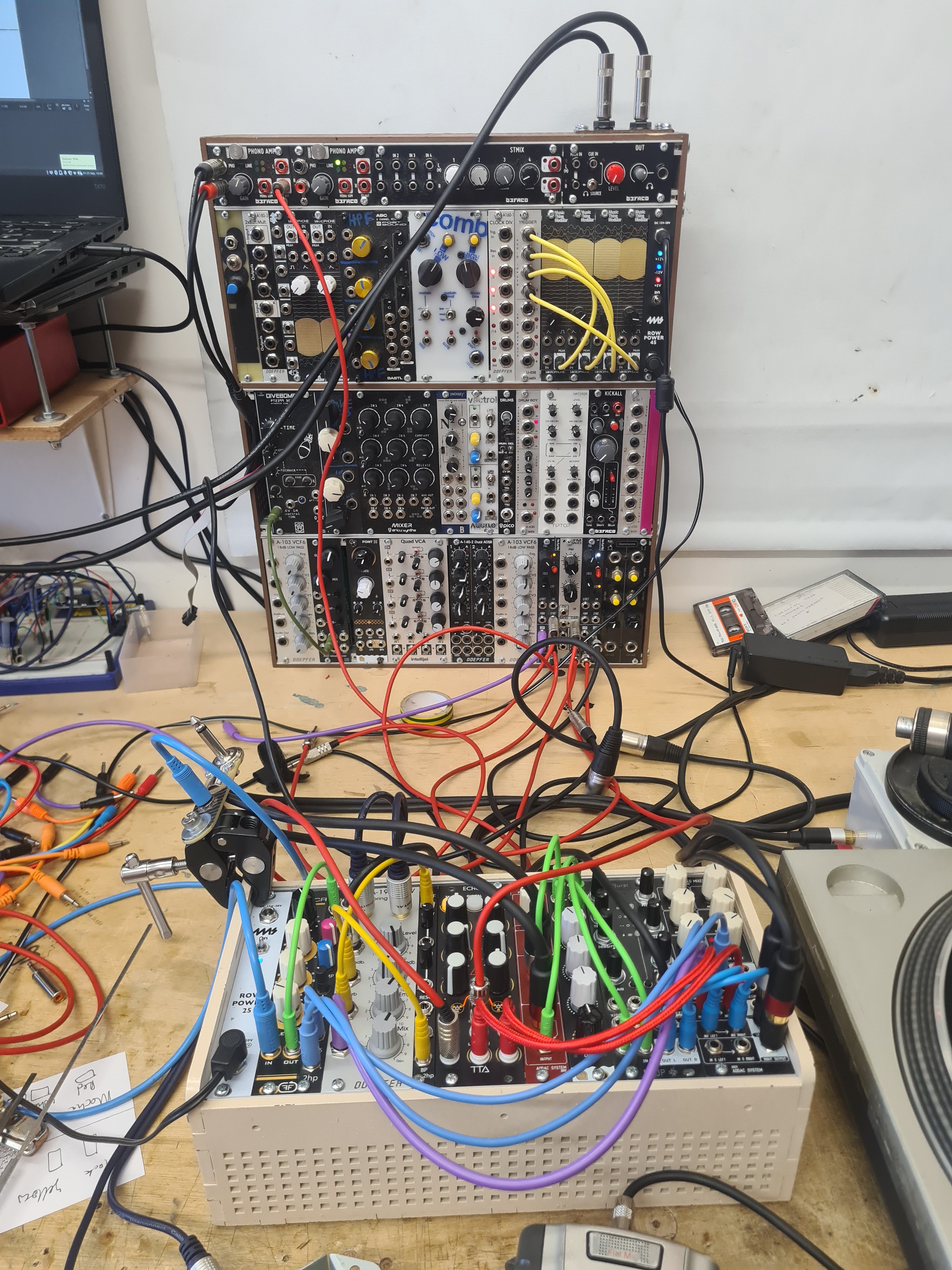
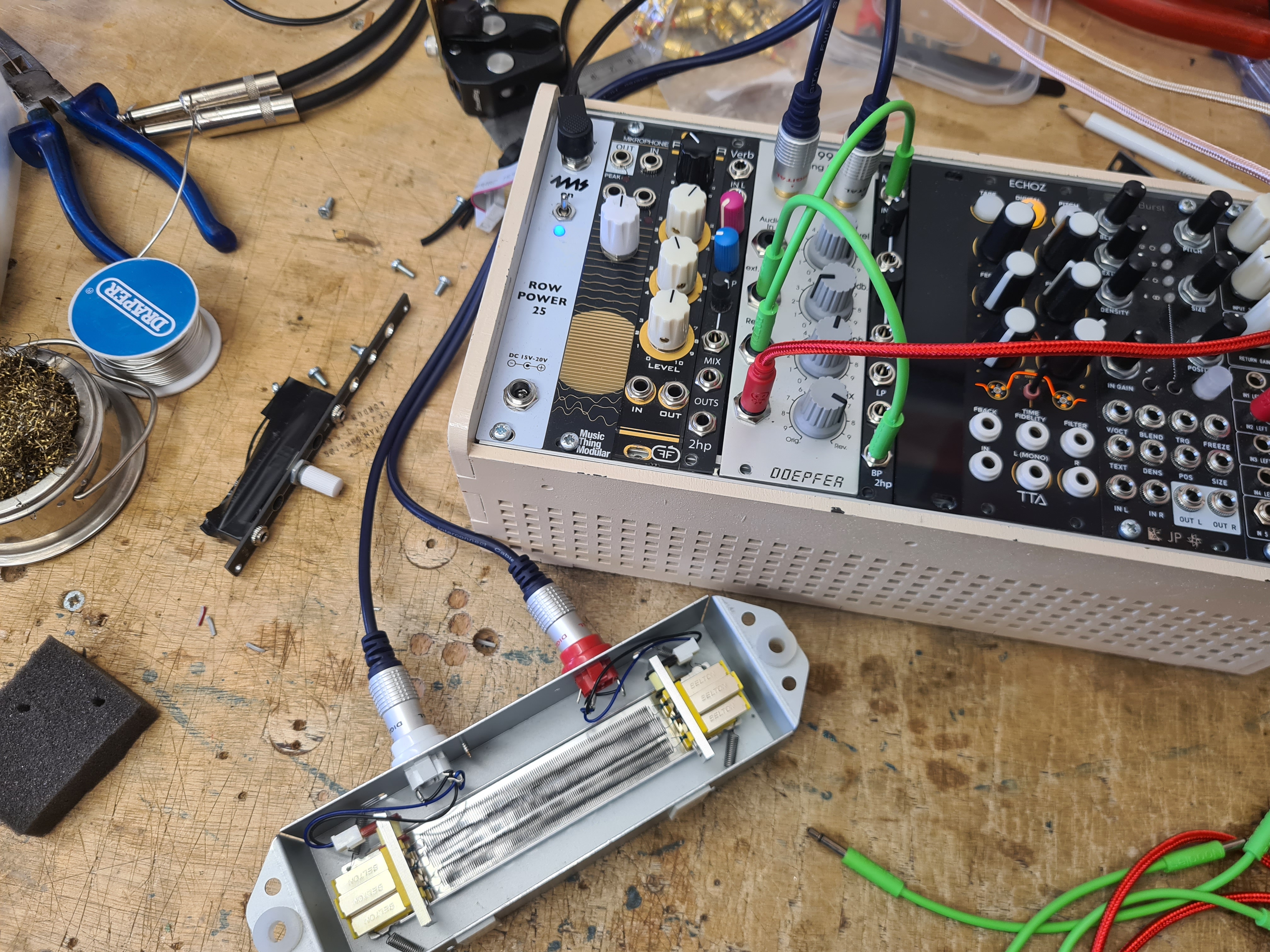
I own a few different spring tanks already, as I used to use them in a previous set up and still use them (often as stereo pairs) for external effects when recording or mixing down. My plan was to be able to switch between different tanks, with different sonic characteristics, resonances and timbres. That does work, but the bigger tanks (mainly from/intended for guitar amps) are harder to drive and most don’t get to the threshold to feed back. I might consider some sort of boost in the feedback chain to try to deal with this – the manual does suggest using a VCA as one option for feedback – but currently I’m happy to use the small tank only for my portable improvising setup. The image below shows the module installed, with the external tank.
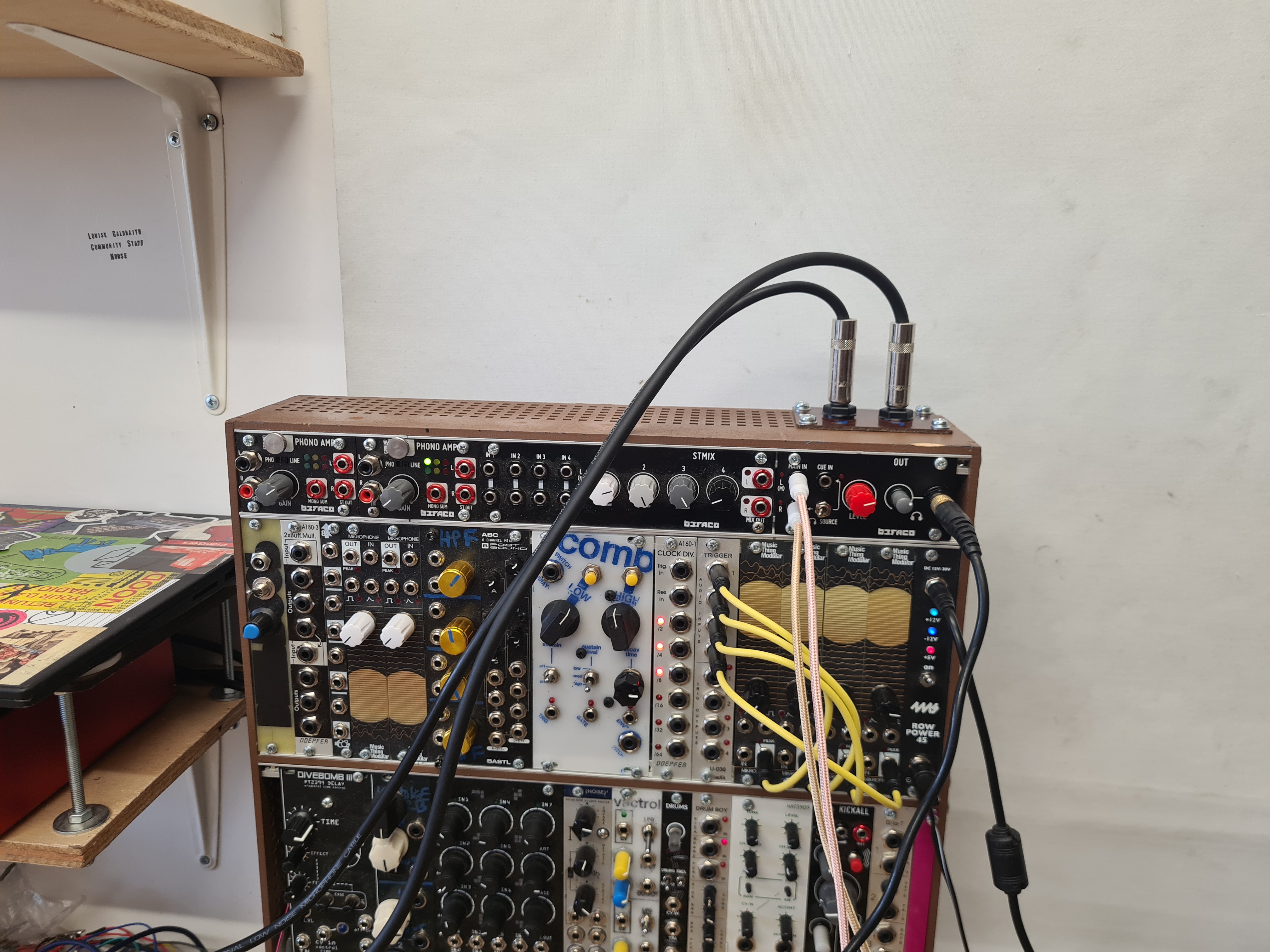
The second mod I worked on this week was for my main modular case. I designed the case to have three rows of 3U (roughly divided into signal control modules, drums, and synth voices) with a row of 1U modules for utilities. I have a 4 channel stereo mixer on the 1U strip, which sums everything in the system, and this feeds into a master out module. Previously I was using an Intellijel headphone output – a small unit just with a pair of inputs, master volume control and 6.5mm stereo jack output. I’ve used it for a bunch of gigs and recordings, but for a long time was getting some problems with noise when connecting to external systems. It sounded like the kind of noises generated by a ground loop with laptop audio, fizzy high pitched crackly sounds, and ruined a few recordings and caused issues at some gigs. For a long time I was tearing my hair out trying to deal with it. Much of my rig is kind of cobbled together. I have self-made modules with arduinos outputting both digital and analogue signals, motor controllers, cheap line-level karaoke delay units, DIY modules which can get noisy in themselves, and compressors amplifying any noise and hiss that’s present.
After lots of dismantling and testing in between gigs, trying to isolate the one module which might be causing all the problems, I realised it was the headphone output whilst doing some multitrack recording. I already had several outputs running into the recorder from individual modules and sub-mixes. When I ran an additional out from the headphone unit, the noise kicked in. This was unexpected as it seemed like such a straightforward module, was made by a reputable brand and off-the-shelf not from a kit. I did various checks for bad connections on the module and bus board, but seemed it was causing issues however I had it set up. Looking for a replacement I found the Befaco Out, a slightly longer 1U unit which did basically the same thing but with separate controls for line out and headphone out (and an optional cue mix).
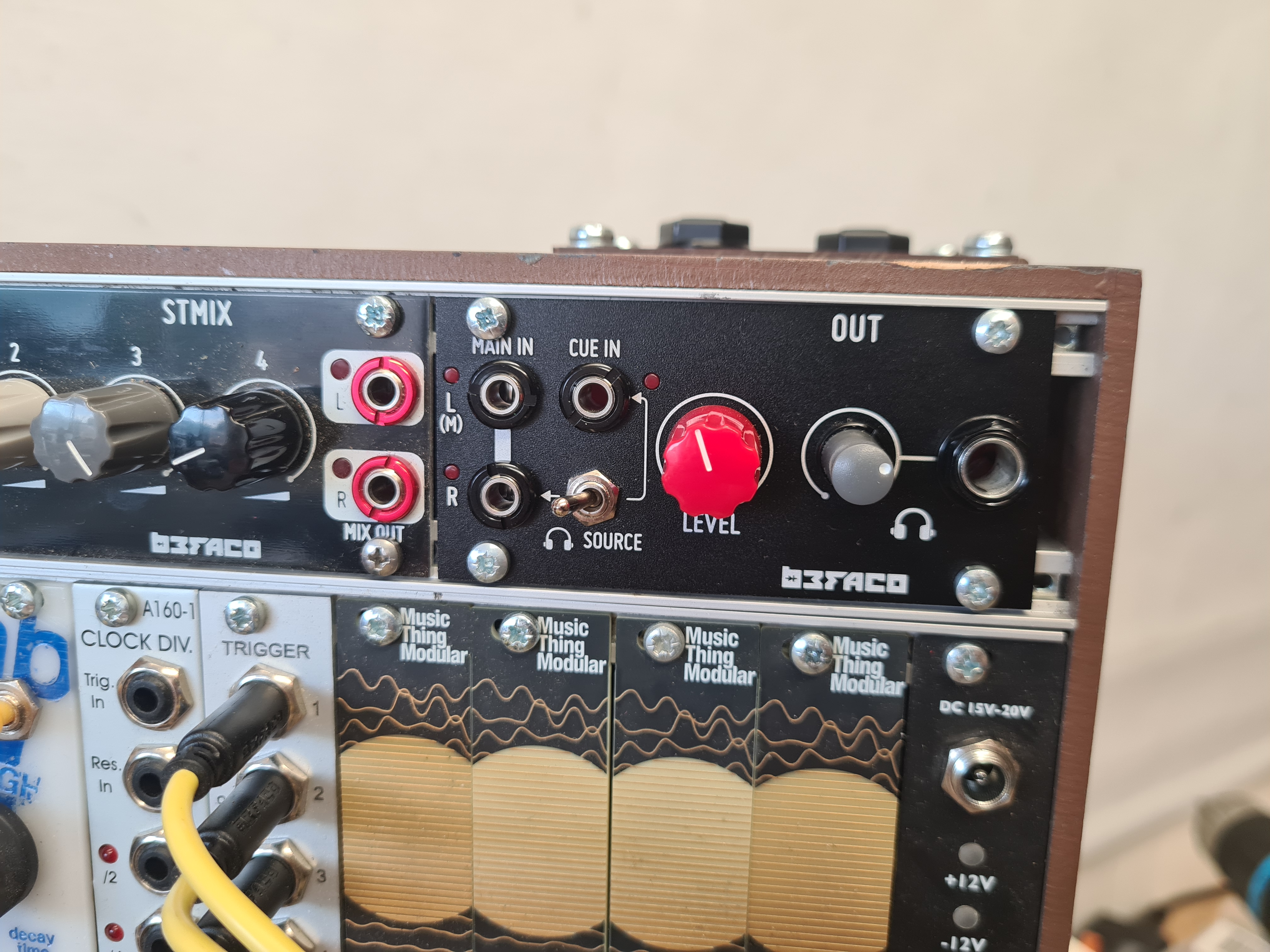
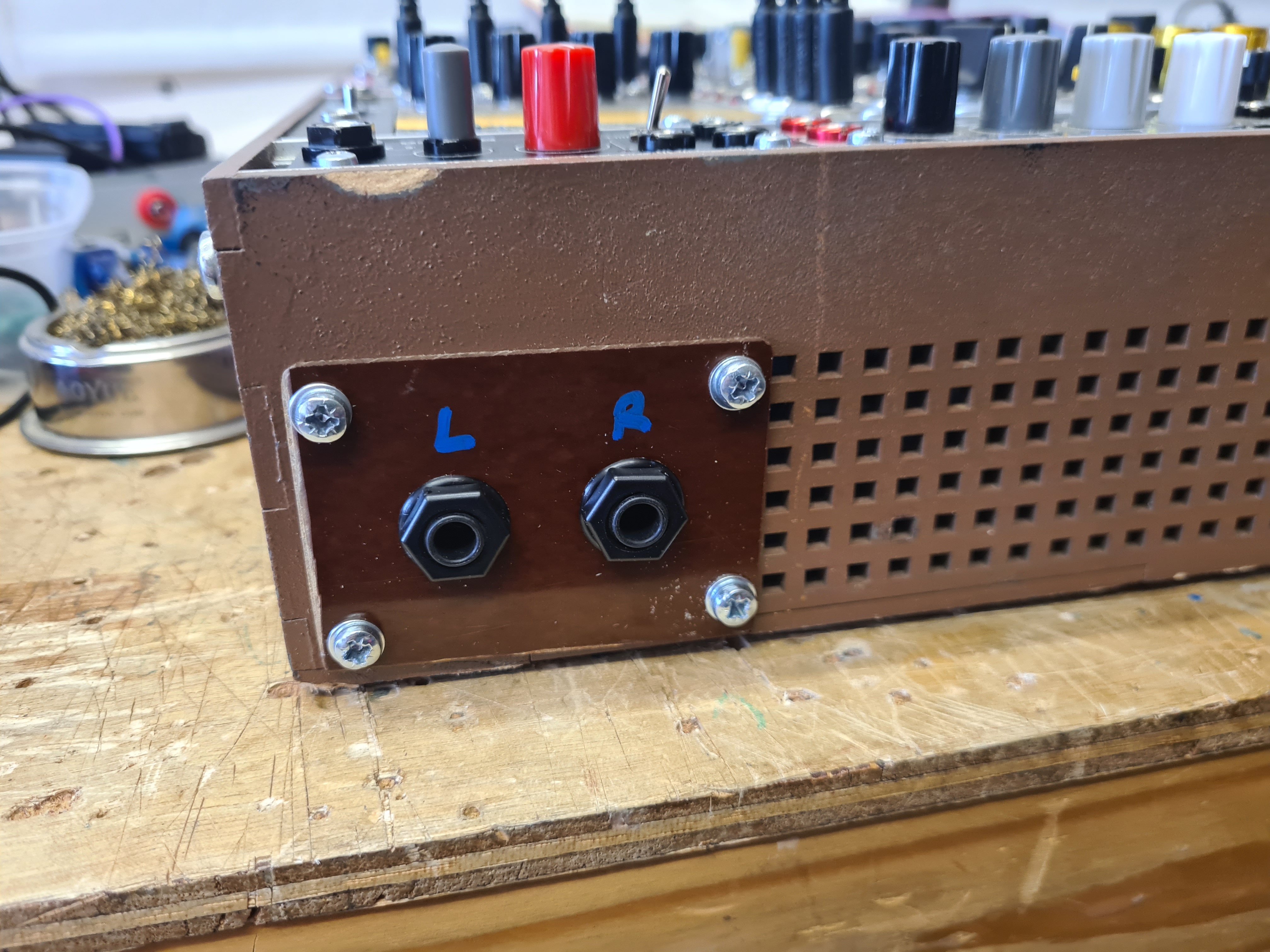
I’d missed out on buying the kit version from Thonk, so went with a pre-made version which was a fair bit more expensive. The only issue was that my home-made case did not have any output jacks to connect to, so I needed to make some. The pins for the output cable were listed in the user manual so it was straightforward to deduce which cables to connect up. I chopped a hole in the vents in the back of the case, and used a piece of some weird bakelite material I bought for making module faceplates with (which had turned out to be impossible to laser cut, as it just burnt and sent off toxic fumes) to make the panel. It’s a pain to cut but it’s very stiff for its thickness. The new output works great – no ground loop noise at all in tests so far. I ended up using the big rig just to route the output for monitoring initially, later using both cases connected together for some recording. The first proper test with it will be at my gig for Westport Sound in Wiltshire in a few weeks.