Finding Track IDs as a hobby in itself
Recently I’ve become aware of an online phenomenon whereby online viewers spend time trying to identify snippets of records in obscure youtube mix videos. Specifically, in a couple of things I’ve posted on my own channel where the identity of the records was never intended as an important part of the content. Both use records in unconventional ways to deliberately produce abrasive, non-musical sound, with a focus on intensity and the visual impact of the process. The first is a video from a workshop I ran in 2019, called Vinyl Destruction. The second, a cut-up video collage of coloured vinyl made as part of Noisevember 2019. Some visitors to my channel have taken it upon themselves to try to identify all the records used in these videos. I didn’t invite anyone to do this, or ever anticipate that anyone would want to, and I find it curious that they are doing.
The attempt to identify records used in DJ sets has a history as long as turntablism itself. Hip-hop grew from repeated breaks, and part of a DJ’s skill was finding new and fresh breaks to play. Obscurity was valued and, understandably, people were protective of their new found material. In a section on The Early Battle Scene, referring to 1975-19758, Kats writes that, “At this time DJs kept the identity of their more obscure records a secret, sometimes removing the labels on their most important discs or pasting them over with labels from inferior records.” (Groove Music p45) So, aside from recognising the music, the next best identifier is the label.
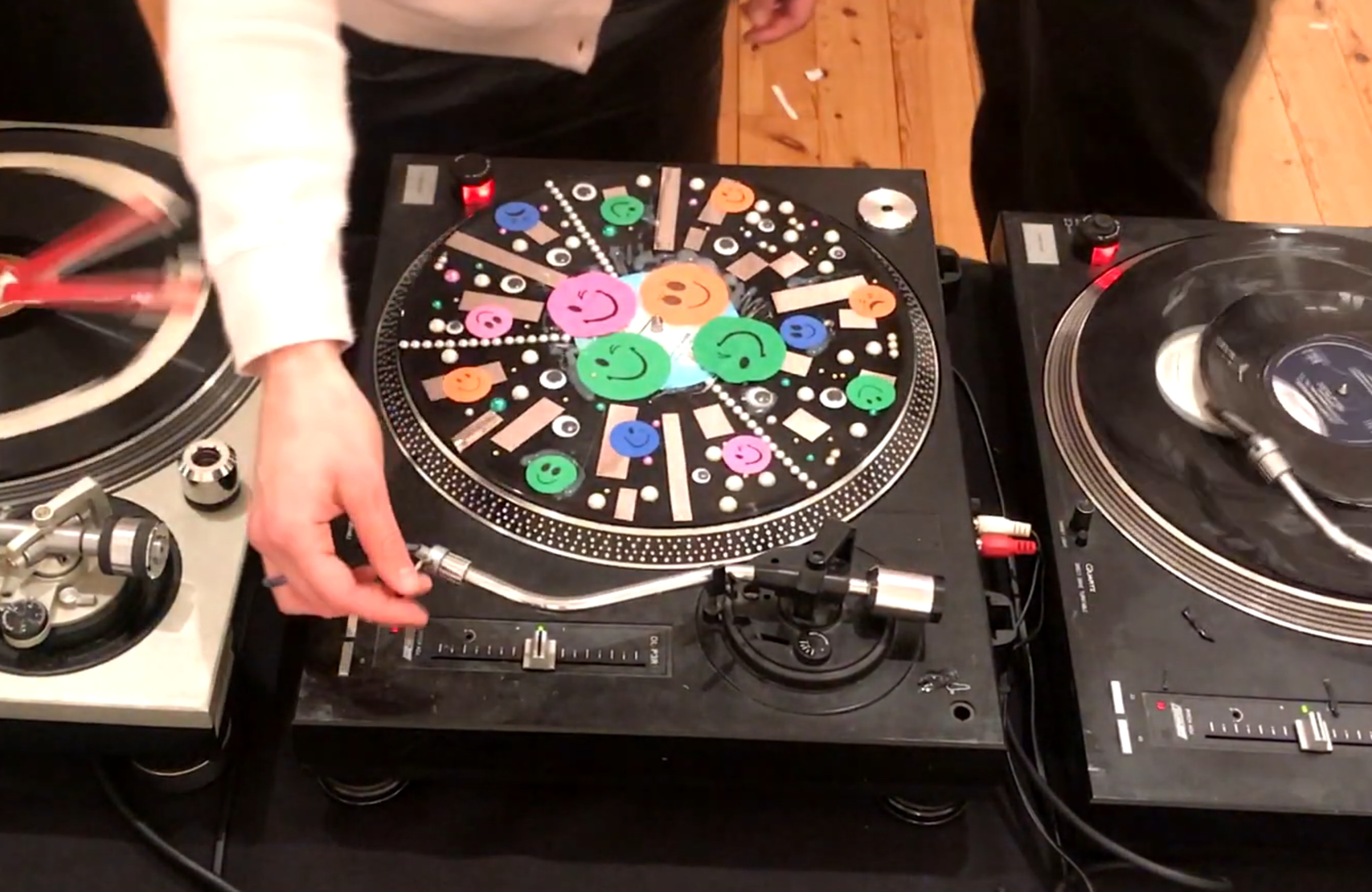
In the Vinyl Destruction workshop, I took a big box of records, some tools, and box of other materials to the gallery and let participants loose on them. I demonstrated various ways of damaging records for different results: snapping them into pieces, scoring them with craft knives, cutting through them, glueing things on, drilling holes, adding adhesive tape and stickers, hot glue gun, sandpaper, adhesive jewels, googly eyes, masking tape, parcel tape, foil, etc. Throughout the workshop participants could listen to the results of their creations and the crescendo was a group performance playing them all in succession/combination on three turntables – this is the video I shared online.
Noisevember (in the form I discovered it) began in 2013. A netlabel release from the following year describes its origins:
“Last year in response to movember and stoptober and all the various other month long challenges that have been put forward in the media, noise musician Lydia Morgan came up with Noisevember, the idea was that during the month of november she would produce one piece of music (primarily noise, but really whatever took her fancy) everyday, surprising other people joined in quite enthusiastically, myself included, well seeing as its almost noisevember time again i thought i’d do a reasonably proper release for it.”
I was a member of the associated Facebook group (I can no longer log in to see the early posts) and in 2019 decided to participate by posting a 30 second video clip each day, making noise in various ways. Many of these involved vinyl, as one of the soundsources I work with the most, including things like a tin foil record and marbles on a metal disk on a turntable. The video which has attracted the attention of one of the Track ID spotters was made noisy through video editing techniques rather than the sound sources themselves. I recorded very short snippets of every coloured vinyl record and picture disc in my collection, then edited them in a staccato fashion, finally playing two then four together, splitting the frame into four quarters.
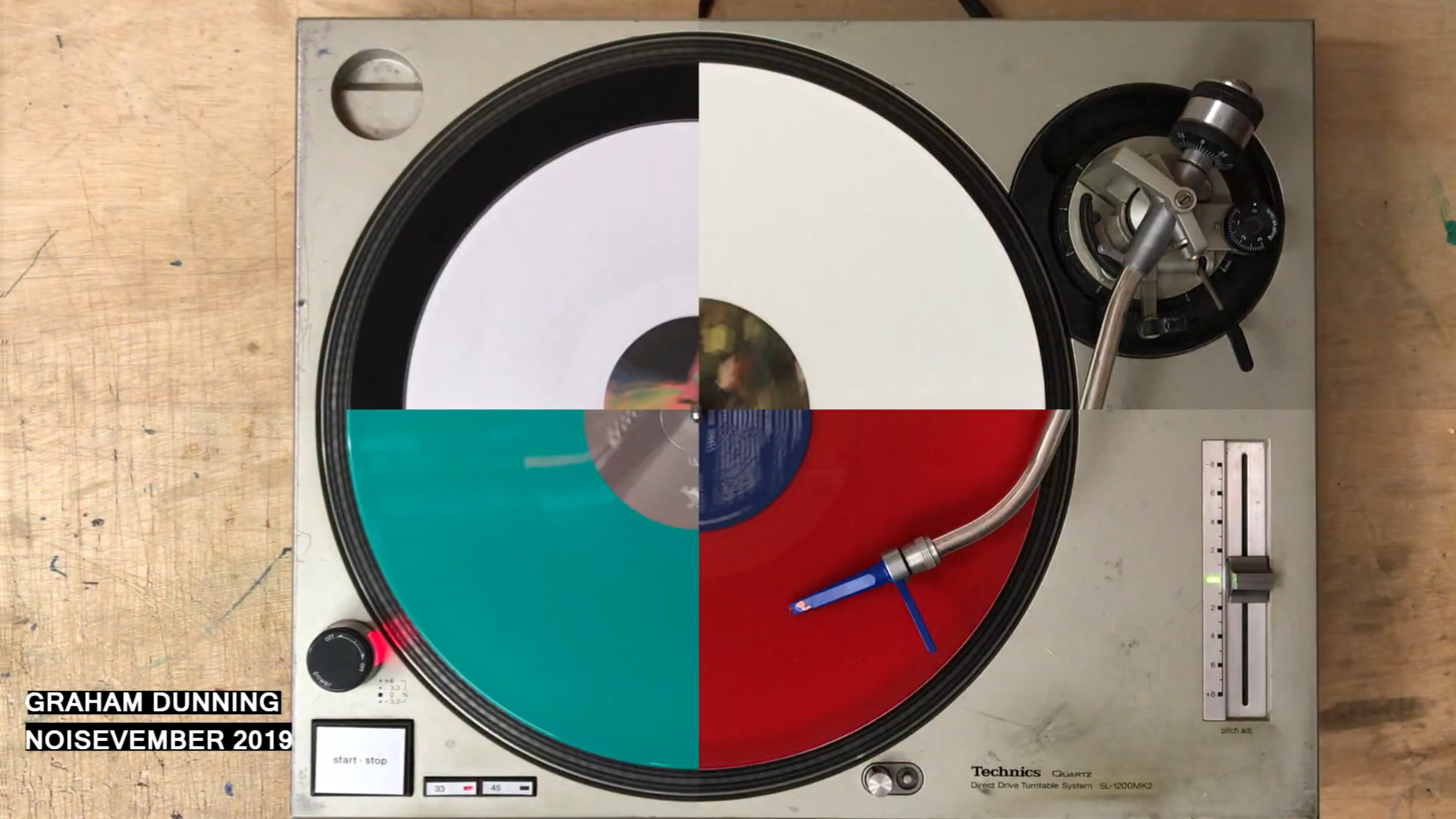
Both videos seem to have attracted track ID spotters, with much more attention paid to the first. My assumption is that this is a hobby some people enjoy, the detective work of analysing the audio and video, finding matches, solving a puzzle. It fascinates me that people would spend so long doing this, in particular because of how throw-away these records seemed to be.

