Consumer Electronics Necromancy (a couple of satisfying repairs)
Over the last couple of weeks I’ve successfully brought two items back from the dead: a four-track tape recorder and a Windows 10 laptop. Both felt like they were going to be difficult, long shots at success even, so I’m particularly glad they worked out. I’ve got plenty of use from both of them over the years, but wasn’t ready to bin them.
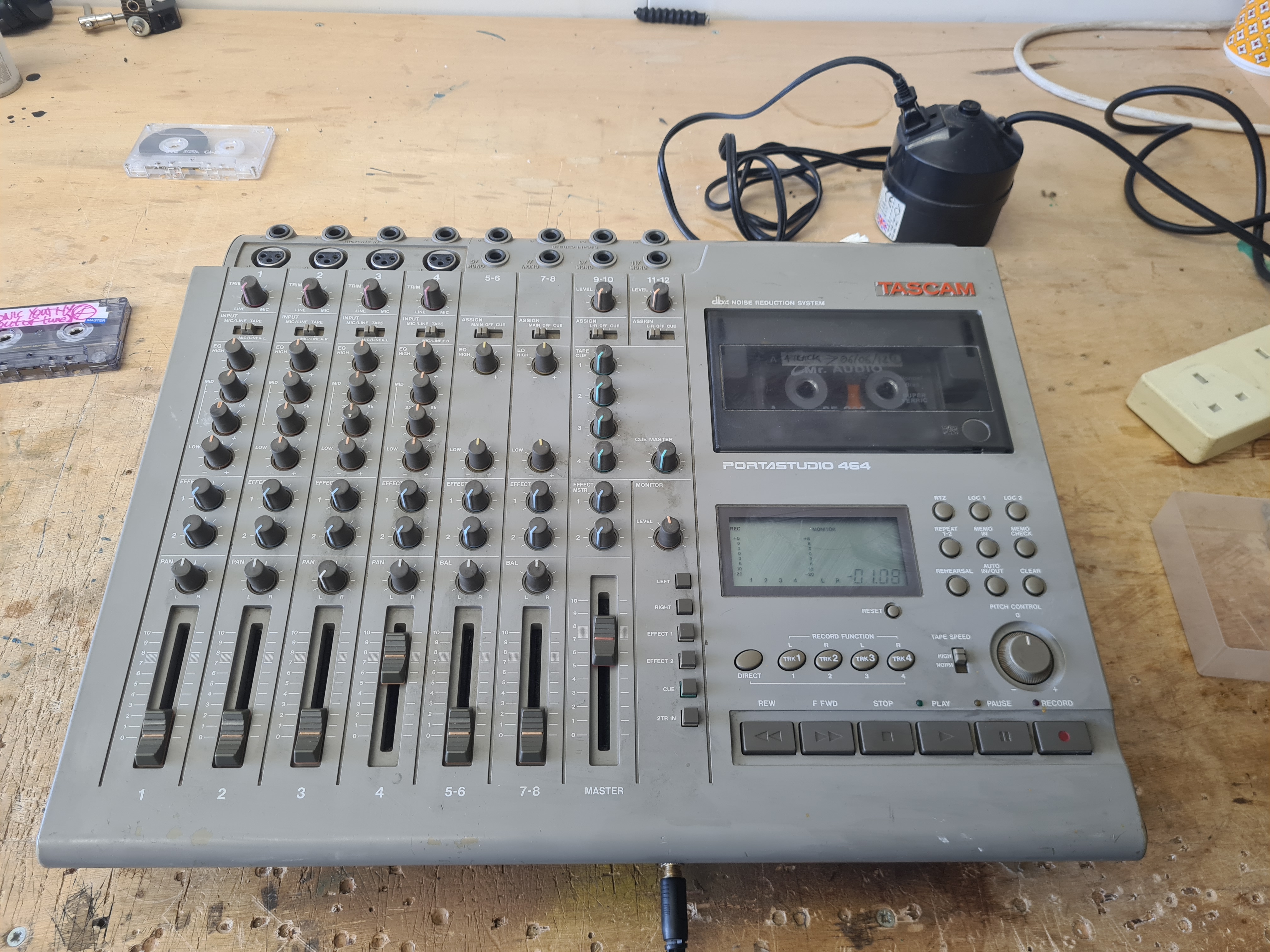
The four-track tape recorder is a Tascam PortaStudio 464. This particular model is the same one my secondary school music room had, which me and my friend Andy borrowed in 1997 to record our punk band’s first demo. From there I went on to use it to learn the principles of studio recording, making lots of tapes and kickstarting my longstanding love of bedroom recording. Around 10 years later I got my own one, and used it over five years or so to record demos with my noise band Blood Moon, and later a couple of solo and collaborative albums. Wound was an album made by live-sampling second-hand tapes, recorded to tape, mixed down and released as an edition of tapes (recorded back onto the same tapes). Tapes tapes tapes tapes. For Inside Memory’s Head, me and Embla Quickbeam each used a four-track in our own home studios, sending tapes through the post to add tracks to each others’, then mixing down together in person at an all-analogue studio. In 2017 I used the four-track as part of an exhibition: a sort of diorama of a bedroom recording setup. Since then it’s basically been sat on a shelf unused.
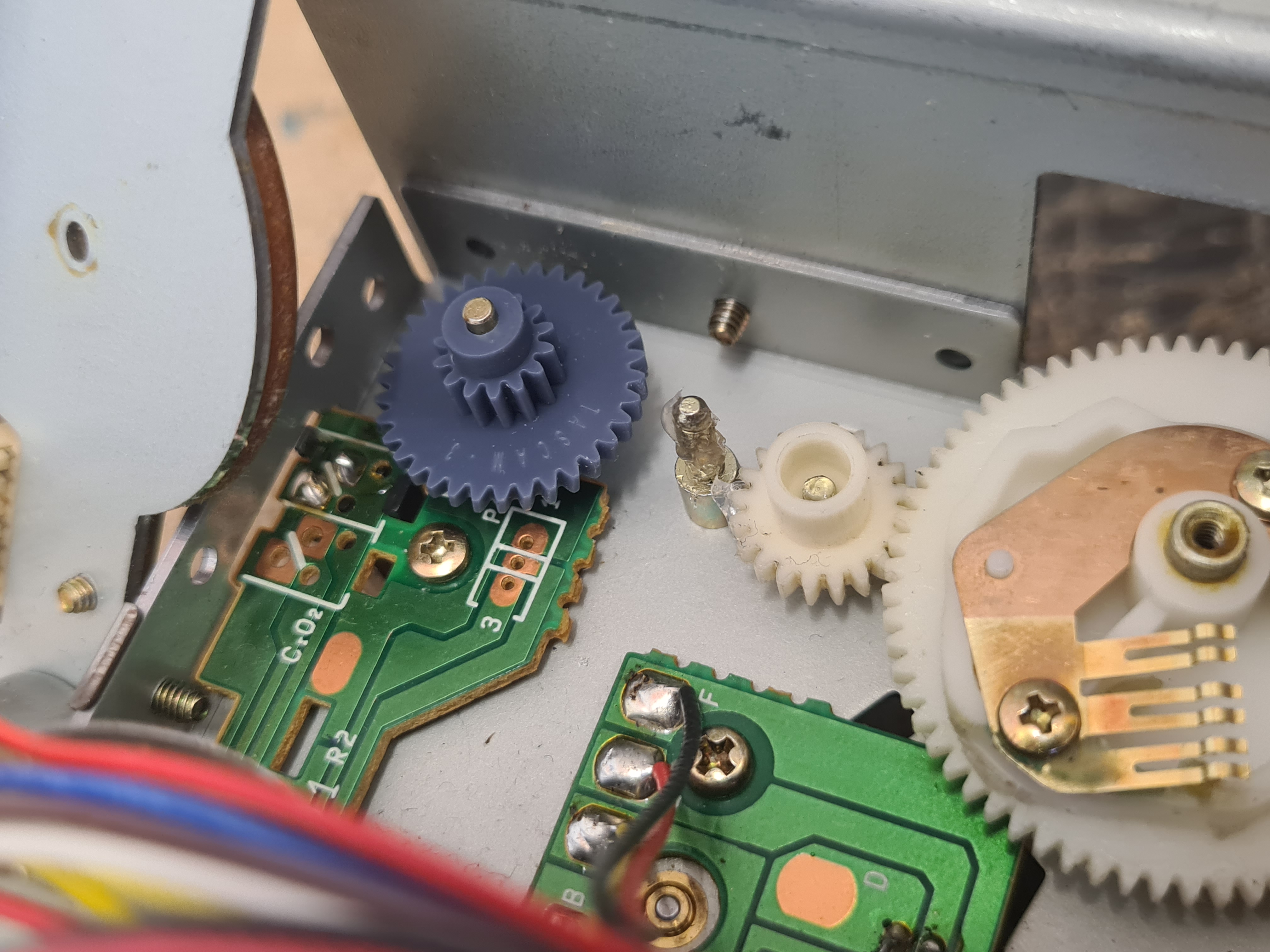
Returning to the PortaStudio recently, I realised it wasn’t working: motor noise from inside but no movement, flashing LEDs but the buttons not working. I opened it up to have a look at the buttons, thinking perhaps the contacts needed cleaning. I managed to get to the right area and rub them down with isopropyl alcohol, reassembling, but it didn’t make any difference. At that point I started looking around online and found a great Tascam 464 playlist by Tetrakan, detailing how to take it apart, and how to handle the most common repairs. Following along with my device, it was clear that I had the same as the most common problems: a perished drive belt (the rubber just melts into a thick black paste over time) and a brittle and crumbling “gear C”, the cog that engages the heads. Due to these failures, the electromechanical logic switching stopped the transport buttons from working.
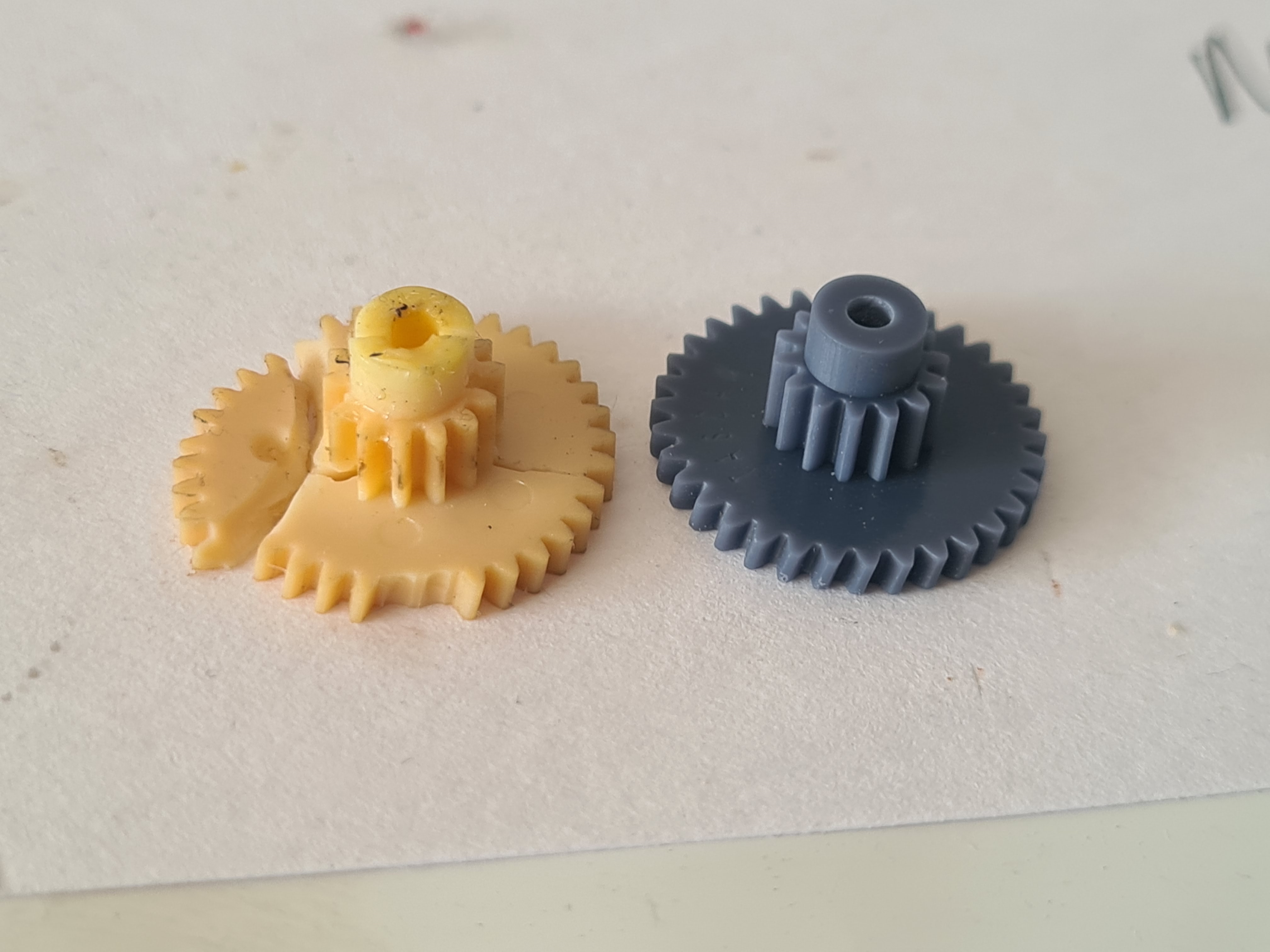
I used the same supplier for the belt mentioned in Tetrakan’s video. And found a supplier in Poland (on ebay) who was selling 3D printed replacement gears. This felt like more of a minefield – the handful of people selling these had widely varying prices, and from the photos it sometimes wasn’t clear how accurate the copies were, whether the material was appropriate, or if the rough-looking texture (particularly in one seller’s photos) would negatively effect how well it would work. Paying £25 for a tiny piece of plastic seems a lot too. But in the end I was really pleased with the new gear C (pictured with its crumbling predecessor) and it worked perfectly. Fitting the new parts was fine, the hardest bit was reconnecting all the cabling inside, which was a bit of a faff. I used some silicone grease to make sure the gears would run smoothly.
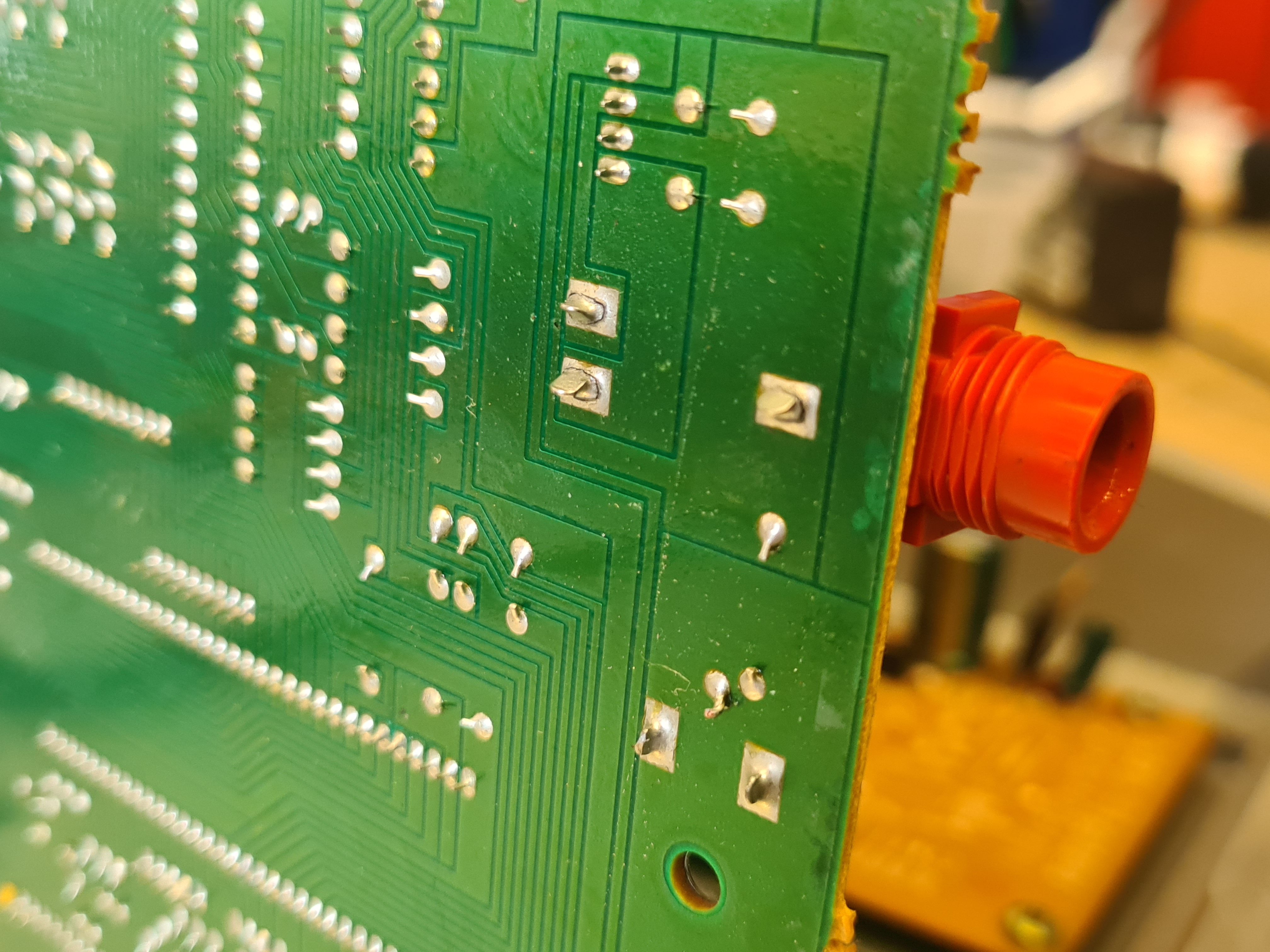
After putting it all back together i dug out some old four-rack recordings and checked it was working. All great, I was thrilled it worked with no issues. I tested by listening via the headphone socket, and remembered a slightly annoying issue from last time I’d used it: sound cutting out in one or both channels, resolved by wiggling the plug in the socket. I gave that a clean with some contact cleaner, but without any change. The socket itself felt loose, rather than just a bad headphone connection. Out of curiosity rather than expectation, I opened the machine up again to see if I could get at the socket and give it a proper clean. It meant taking out another circuit board, which was somewhat scary with many more cables to disconnect. But having accessed it i could see the solder joints had failed (see photo). Wiggling the socket made intermittent connection to the circuit board. As it was a nice old board with big solder joints, it was easy to repair with the soldering iron. Now the headphones work perfectly too – so it’s actually an improvement over last time I used it for recording.
I can’t wait to start doing some more four-track recording, now. Having loads of ideas for projects, specific techniques I want to try, and some collaborations too.
Repairing the laptop was less of a hands-on process. I bought the Thinkpad T470 in 2018 and used it extensively for recording, mixing, programming the radio show and all my admin. I did play some live coding sets with it too, though it tended to struggle. It’s got an i5 processor and 32GB of RAM, and was the best I could afford at the time. The hardware wasn’t supported by Windows 11, and its slowed down quite a lot over the last couple of years, so it had been relegated for use just for things like note taking (on Obsidian) or writing emails. Nevertheless, I was a bit worried about security with the end of Windows support, and it felt like a good time to trial running Linux as an alternative.
I found Morten Mosgaard’s series of blog posts on Finding the right Linux Distribution incredibly helpful, to the extent I wouldn’t have considered making the change without them. Though I’m not planning to use the laptop for much heavy audio stuff, it is a consideration, so the factors Morten discussed gave me lots to consider. In the end I went with Linux Mint as the distribution, mainly as I wanted the process to be as painless as possible, and I didn’t want it to be too different from the Windows workflow I’m used to. I chose MATE as the desktop environment – of the three on offer it was apparently a bit more minimal in terms of features but also better for older machines and making best use of the hardware. It wasn’t that clear beforehand exactly what features I wouldn’t have access to, so it was a bit of a stab in the dark. Using windows I tend to turn a lot of features off – I don’t want widgets or animations, and definitely no AI integration – so if those “advanced” features were missing I’d be happy anyway.
The installation process was completely painless (especially after the stress I had installing windows on my self-built desktop PC a couple of years ago) and lots of the programs i use were already installed too. I’ve been slowly moving to open source or free-to-use software over the years already, so Inkscape, Gimp, VLC player, Audacity and LibreOffice are already the ones I use. Obsidian, Reaper, Signal all have a Linux version, and with the inbuilt software manager it was easy to get them all installed. I barely had to touch the terminal.
I had some problems trying to sort the audio out with Reaper. It worked fine with the default audio drivers, but when I tried to get Jack running (which I imagine as the Linux equivalent of using ASIO rather that inbuilt Windows sound) I got stuck. Installing lots of things like QJackCtl, Jack Mixer, PipeWire-Jack – in the end it was mostly guesswork. If Reaper was working through Jack, VLC or Firefox audio was broken, and vice-versa. I spent a couple of hours faffing, installing and uninstalling things, broke the audio completely, then used the Time Machine function to revert to the state it was in before. So at the moment, I’m sticking to default audio, but might look at this again in future if I need to. I won’t be using an external sound card, and the most taxing audio work would be mixing a couple of stereo tracks at the same time for making the radio show.
Two programs I use a lot don’t have Linux versions, and this would be something to look at more in future. I use googledrive for cloud storage and automatically sharing files. Eg, for Obsidian I would keep my vault for research and writing on both the laptop and my desktop, so they’re always synced. Dropbox do have a Linux version, so I am considering moving my vault over to that (I have 20GB allowance on there) but for now I’m just keeping the laptop off the cloud – I can throw things into gdrive via the browser if I need to. I do plan to leave google eventually, probably for Proton, but doesn’t look like that’s feasible for cloud stuff at the moment. I have another laptop (newer but more broken) at the studio, which I use for recording. Having it connected to gdrive means i can pick up Reaper files on my desktop at home for mixing, which works really well, so I’m thinking about options for how to do that. The other program I use loads is Ozone Izotope 8, which I paid over £200 for a few years ago, so don’t want to jettison. It looks like there are some ways to use the windows VST but I’m not ready to dive into that yet. I wouldn’t use it on the laptop really anyway.
Generally Linux on the Thinkpad seems to be working great. Using it for browsing is marginally faster than it was on Windows, from what I can tell. The battery seems to last longer, and doesn’t totally drain when the laptop is asleep, like it did with Windows. Time will tell – but I’m glad to have avoided the planned obsolescence of the Win 11 upgrade, and it feels like something of a milestone to have successfully got a Linux machine up and running (albeit in the least technical way possible really).
Buoyed with confidence I’ve got my next repair in my sights: a new screen for the studio laptop. For a couple of years its been glitching, with these vertical lines which get more or less intrusive seemingly at random. I’ve tried reapplying heat sync paste, forcing it to use one or other of the two internal graphics cards, testing using an external monitor (which is absolutely fine), wiggling wires, clearing dust, moving it to different locations and anything else I could think of, without much correlation to how and when the lines appear. If the screen replacement is successful, I’m now considering installing Linux on this machine too.
Last night looking for unobtrusive photos for the desktop background I chose a still from Nosferatu, looking like he’s up to no good. Completely by coincidence, it feels appropriate for a bit of obsolete technology brought back from the dead.
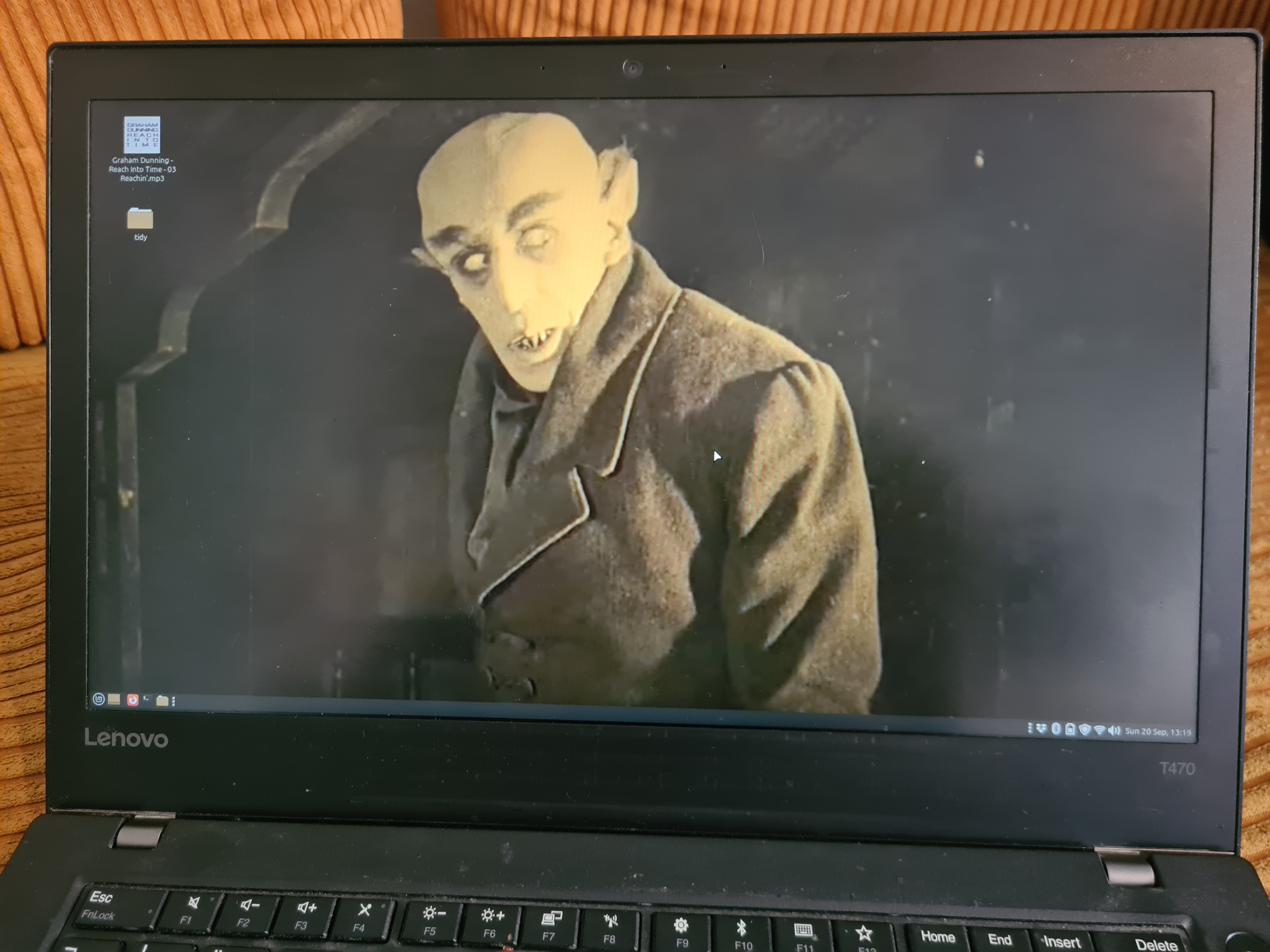


But where are your sigils and spells?
it’s all part of the process