[New album] Quern. Mechanical Techno studio recordings.
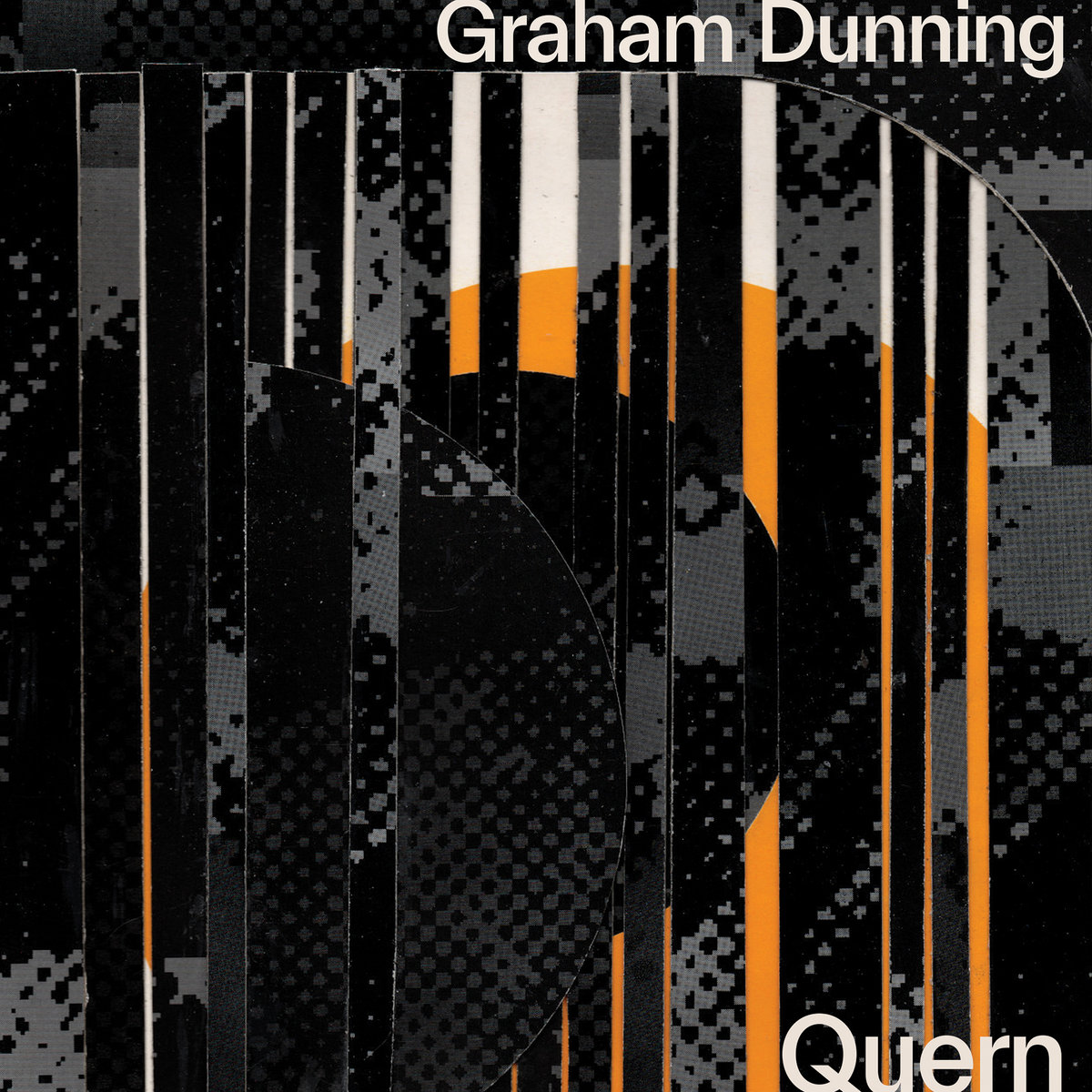
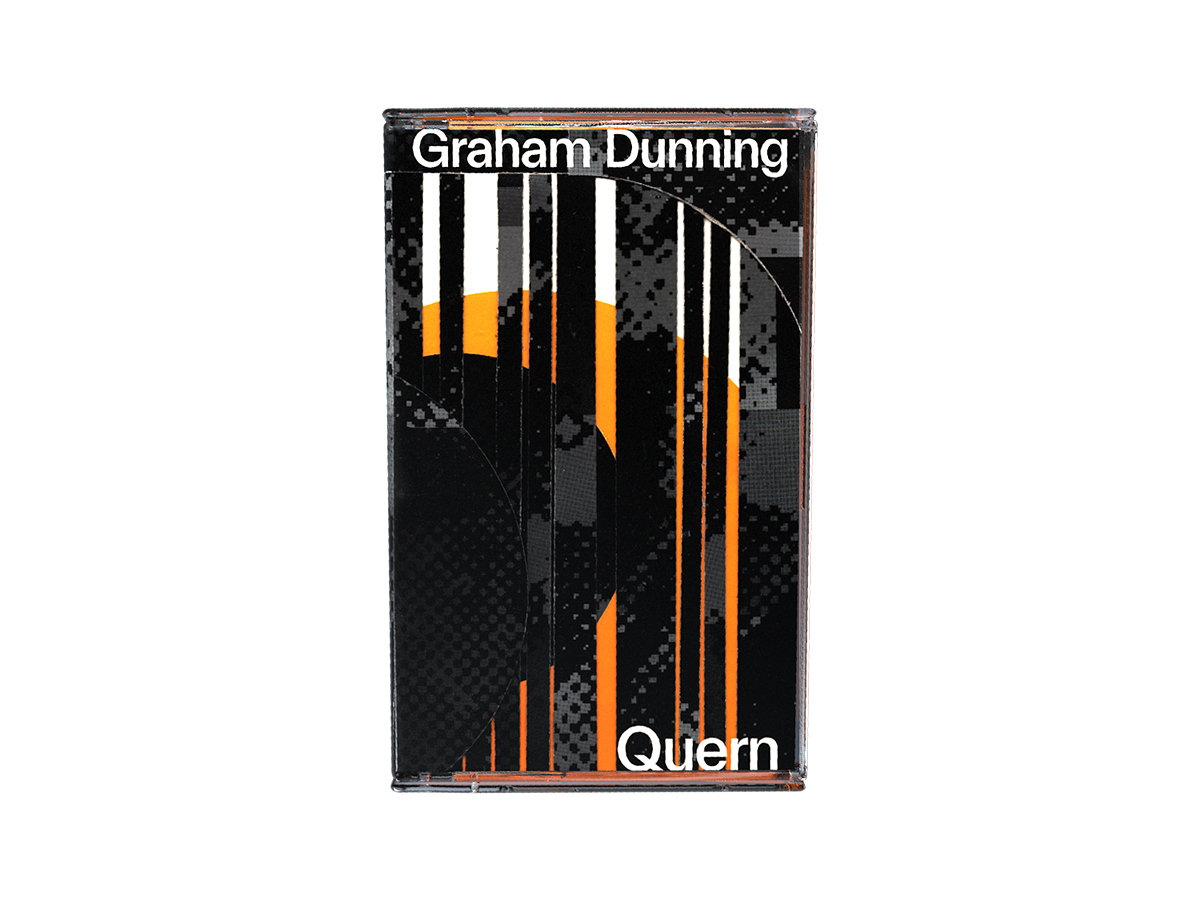
Quern is a collection of tracks recorded with the Mechanical Techno setup during my PhD research. Twelve tracks of wonky techno, machine funk, suboptimal beats and rough cut rehearsal edits. It’s out on cassette and download via Brooklyn based label Jollies. The cover is a record sleeve cutup collage. More info in the press release below. Stream/buy from bandcamp here: https://grahamdunning.bandcamp.com/album/quern
Graham Dunning’s forthcoming album on Jollies Records documents the latest evolution of his Mechanical Techno system: a hand-built network of modified turntables, physical mechanisms, and chance processes that has formed the focus of his practice-research based PhD project over the past three years. Every track on the record is composed and performed entirely through this system, capturing dance music shaped by friction, instability, and human intervention.
Traversing techno, filter house, and acid, the album folds in traces of footwork, instrumental hip-hop, and UK garage, animated by a distinctly wonky machine mischief. Rhythms stumble, hi-hats slip into odd meters, monosynths growl, and record crackle becomes rhythmic material rather than artifact. The mechanical imperfections giving each track a handmade, continually shifting feel; all the while humanizing the equipment.
Each track employs a specific mechanical strategy: from beats formed from odd-toothed cogs, ball bearings triggering evolving MIDI sequences, ping-pong ball rhythms,mechanically played percussion with manually synchronized turntables, among other arrangements.
There are no neat drops or euphoric builds here. Structures bend and re-form as sounds unfold through a choreography of manual gestures. The album captures dance music in a state of productive imbalance, where machines are not tools for precision, but collaborators in uncertainty.
Approaches to Remixing
A label approached me recently to do a remix for one of their artists. It’s got me thinking about the different approaches it’s possible to take, and considering what I might do for this one. The first stage, of course, is listening through to the original artist’s tracks to see what might work. So whilst doing that I thought I’d revisit some of the methods I’ve used in the past. I’ve grouped the tracks into three broad-brush approaches: physical remixing, live code remixes and triggered-sound mixdowns.
Physical remixes, as I’m calling them, use physicality in two ways. First, taking either the physical artefact which makes up the release (typically a record) or copying sonic elements of the track onto physical media (tapes or dubplates). And second, applying a musical process where physicality plays a role in the outcome. Making music with Mechanical Techno that physicality is obvious, but as well as the contraption itself I mean my physicality in mixing it down: the hands-on playing on the mixing desk, effects and other technical components.
Colin Webster – Katepistemum (Graham Dunning Remix)
The first physical remix I did was for saxophonist Colin Webster for his set of solo recordings, Antennae. My approach here was to record snippets from the original piece onto cassette tape loops, each probably around a second in duration, but none of them of identical length. With eight tapes in total, each with both sides recorded, I then recorded a live mixdown combining them playing back on multiple tape players. Mostly leaving them to run, sometimes turning tapes over (for the other loop on the other side). Partially following Reich’s Process Music model, but with minor interventions to adjust which layers are present. The resulting piece adds as much tape hiss as there are saxophone sounds.
Michael Forrest – Computer Screen (Graham Dunning Mechanical Techno remix)
Michael Forrest’s track which I remixed was musically very different: an upbeat electronic pop tune with a vocoder chorus, layered synths, electronic percussion and sung vocals. My plan from the outset was to follow the then-developing self-imposed rules of Mechanical Techno, which meant I needed to get the stems into the playable hardware space as much as I could. I got a dubplate cut with sounds from the original piece, recording a few minutes of each at 133.333 bpm so I could effectively use them for force-locked grooves on the turntable. The verse vocals were more difficult, so I used a smartphone-based sample playback app and loaded each verse onto a different button, feeding them through effects pedals and a synth filter into the mix.
Michael filmed the video, like the previous demonstration video we made together. Similarly to that process, I hadn’t actually ‘written’ the music we were filming till the filming was happening. The whole thing was done in one session: building the machine, setting up the video, and mixing down the remix live. In hindsight it’s much longer than it should have been. With practice I’ve got better at making tunes change shape more quickly. I didn’t want to edit the take in any way, it was important at the time that it be entirely structurally consistent.
Sculpture: Projected Reworks. Graham Dunning – Grill
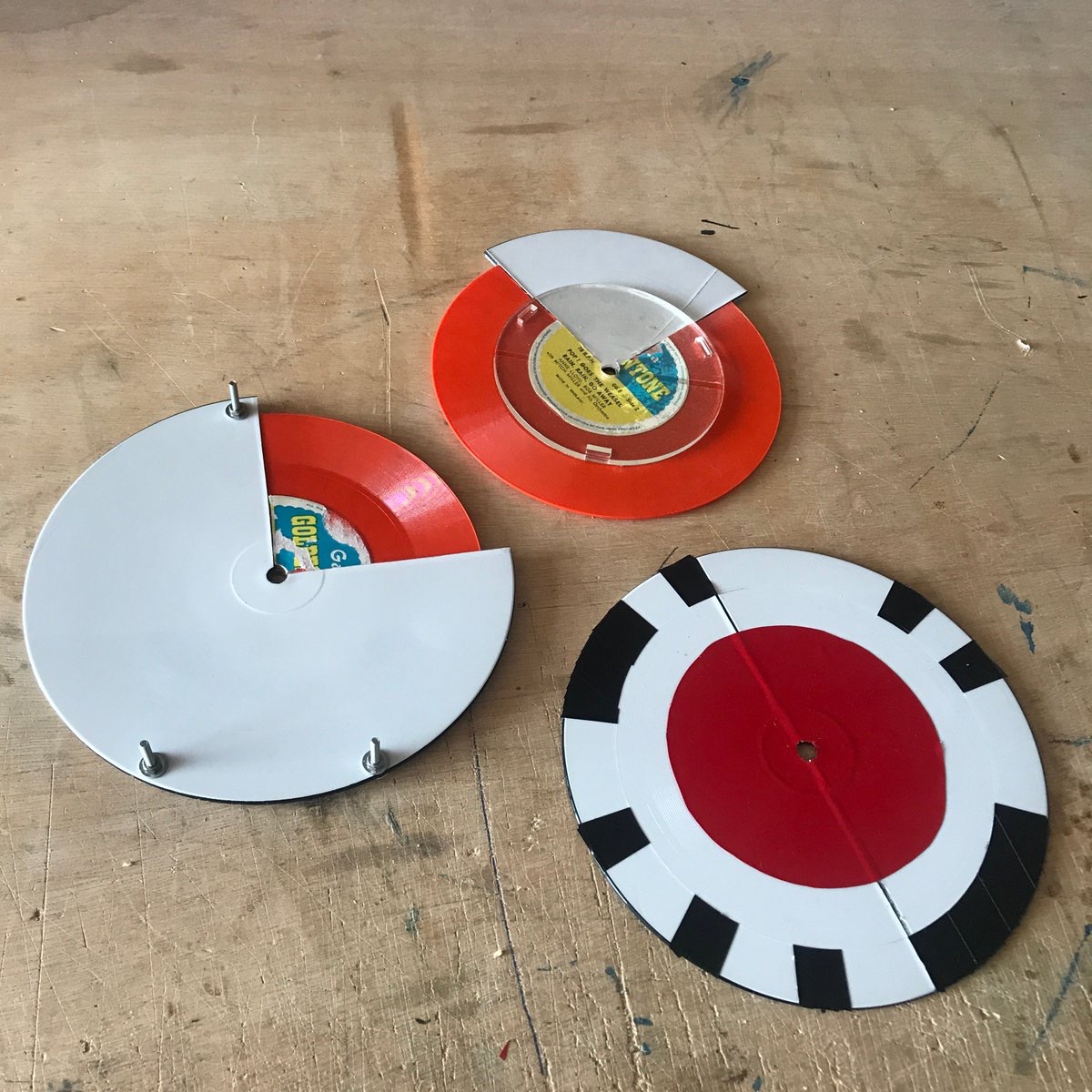
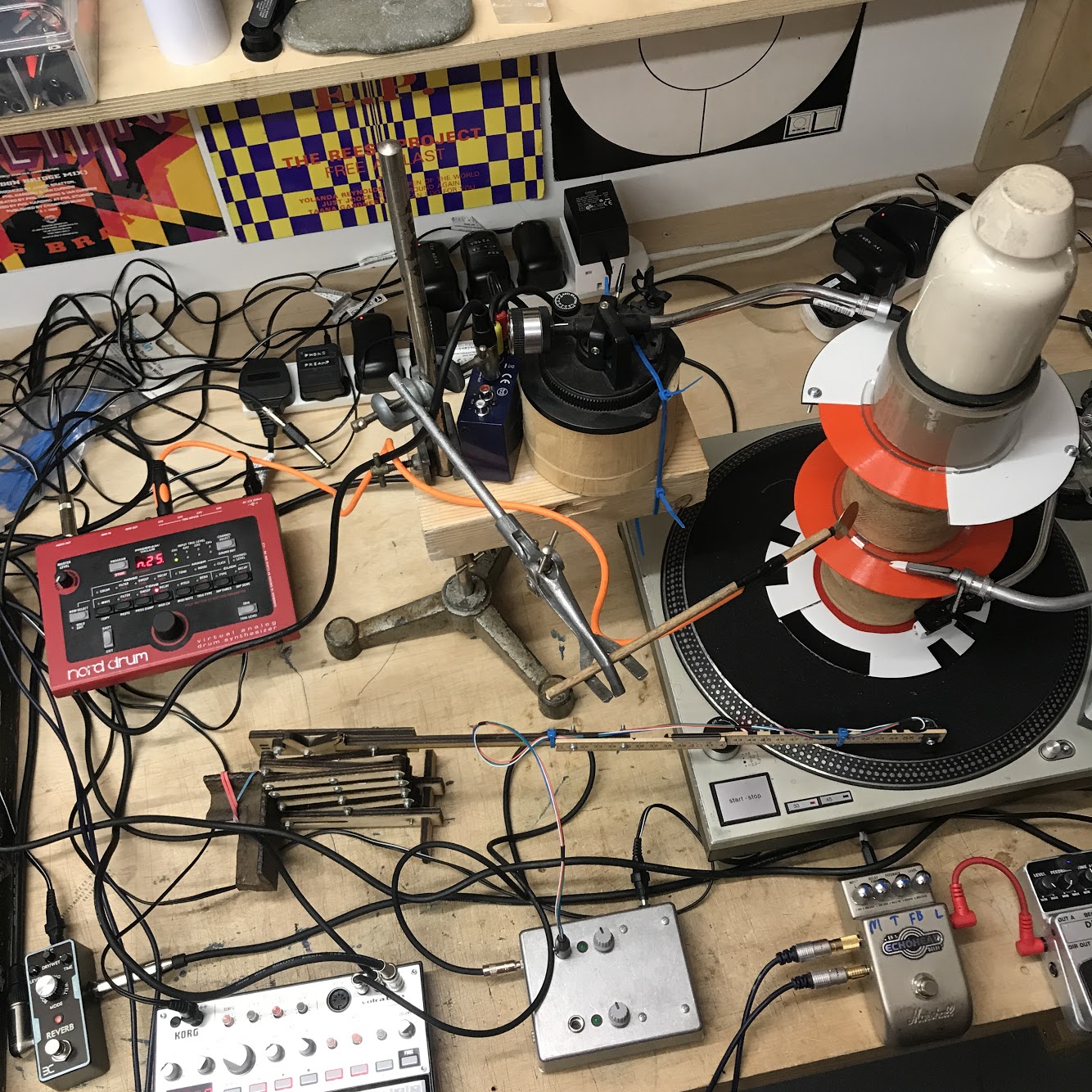
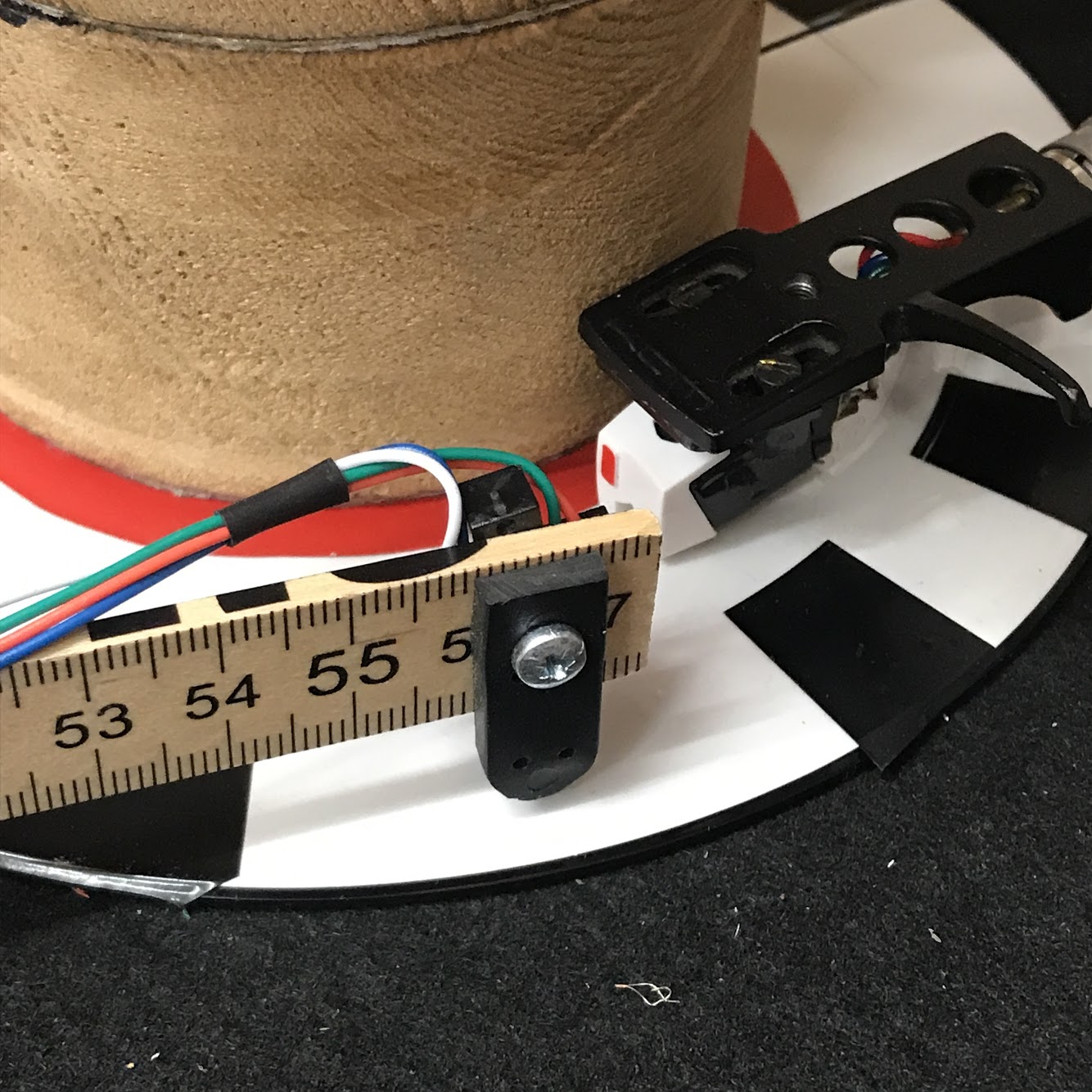
My remix for Sculpture was a lot more open-ended to begin with, as the release consisted of a five-inch picture disc with several locked grooves on each side. That is, there wasn’t really a ‘song’ to remix as such. I was given two copies of the disc, pre-picture adding, and at seven-inch size not five-inch. Some odd objects really. I made three hybrid discs from these (pictured), for use with the various interfaces from the Mechanical Techno setup. One disc I cut in half, flipped one section and re-stuck, adding some black stickers to the blank (non-etched) outer rim to use with the optical reflection sensor. The other I cut a quarter from and matched that with a chopped up 1950s children’s music disc (in fetching orange colour), adding pegs to one of the discs to trigger drum sounds. For the remix itself I played all three records simultaneously on a tower, with a tone arm on each record, optical sensor for a Volca Bass clock and triggers for drum sounds. The output was a live mixdown, with quite a lot of sound from the original Sculpture locked grooves.
Ore – Test Press Remixes. Graham Dunning – Skarn
To make a remix for Ore I followed a similar, if less destructive path, with forced-locked-grooves set up with multiple tone-arms on the test pressing version of the album. The initial impetus for the Mechanical Techno project was the inherent rhythm of the single-cycle-loop, and this piece foregrounds that with a half-time head-nodding beat and layers of drone.
Bangsing – I Kadek Tunas Sanjaya (Graham Dunning Remix)
I’ve also done a couple of remixes without using physical materials or hardware at all, both with the live coding program TidalCycles. For Indonesian label Insitu Recordings I remixed Bangsing’s track I Kadek Tunas Sanjaya, a recording of live-played gamelan. I sampled individual notes from the original recording an made a new set of sequenced patterns in the program, loosely following the structure and pacing of the original.
Graham Dunning vs THAT CLOUD – There’s another one, careful
For the Rental Yields project by Manchester Label Front & Follow I was paired with That Cloud and invited to remix several stems of noise, plunderphonics and instrumental recordings. I chose to use the material fairly blindly, programming essentially a series of rhythmical gates and allowing the randomness of the selection of different segments of the stems to guide the shape of the piece. There are no additional sounds but a lot of manipulation of the original content to create the kind of percussive sounds I wanted. I enjoyed exploring the amplitude and filter modulation possibilities of Tidal, which felt like a very different way of using samples than the simple triggering I’d done with the Bangsing track.
Matt Atkins – Responses 2. Graham Dunning – Response 12
The final approach I’ve used is triggered-sound mixdowns, using the original content to generate material via hardware, or for me to mix in a hands-on way. Matt Atkins’ Responses project provided a solo percussion piece which I filtered and gated to generate triggers for synth and drum sounds. The remix follows the source material beat-for-beat but essentially replaces the entirely acoustic small percussion sounds with (hardware) digital synthesis.
Graham Dunning – I Got That Touch (ft. Sensational)
Finally the collaboration/remix for Seagrave records of a vocal track by Sensational uses the same splitting and triggering method. I’d originally thought about trying to write a beat for the rap to go over, but couldn’t get my head around the rhythm of the track, and came to appreciate the odd timing and unusual cadence of the vocals. This time I played the trigger output sounds back through various delay and reverb effects (as well as the vocals) and made a messy and noisy live dub of the output.
Since finishing the new modules and devices through the PhD I’ve got many more options for ways to remix and mangle both physical media and sampled audio. I’ve not really planned how I might approach the next remix – I always want to let the source material suggest a direction – but I’m looking forward to seeing where that might go next.
PhD Thesis: Mechanical Techno: extended turntable as live assemblage
My PhD has now been approved by university, so I can now share my thesis and the media that goes along with it. Here’s the main page with the thesis download and links: grahamdunning.com/phd In a three-year practice-as-research project, I developed new instrumental interfaces, performances, recordings and collaborations with the Mechanical Techno extended turntable setup. The thesis presents this practical work alongside discussing of the project as both a type of assemblage and a process of assemblage.
See the abstract below for more info.
Abstract
This practice-as-research thesis uses Mechanical Techno, an automated musical instrument-system and kinetic sounding sculpture, to analyse liveness in electronic music, framed by the concept of the assemblage.
As a project Mechanical Techno uniquely bridges several fields of research: experimental turntable practice, electronic dance music, sound art, and new musical instrument design. The research project shows a new body of work developed across these areas. A portfolio comprises documentation of a live performance, studio recordings, musical instrument designs, and new collaborations. Led by the practical work, the exegesis discusses the way the instrument-system works and what it can do, framing the work at different scales of assemblage.
Mechanical Techno is presented as a system which embodies a high degree of action-sound-coupling and machine liveness, enabled by the particular performance approach and set of affordances which are built into its design. Through live work in the studio, the project is considered as a physical audio workstation, enabling a discussion of the resulting mechanical and human signatures which define its aesthetic. Mechanical Techno sits between an automatic playback system and a playable musical instrument, and uses various interfaces for live inscription developed during the research project. This enables an investigation of the role of the setter in contemporary music practice. By combining Mechanical Techno with other artists’ projects, new collaborations are considered as live assemblages. The thesis argues that the use of the extended turntable as a mechanical musical instrument is a category of turntable practice distinct from both dance music DJing and instrumental turntablism. The several strands of creative practice contribute to an overarching discussion of liveness and its relationship to assemblage theory within experimental and electronic musicking.
Account of a good clubbing experience in a small venue
This weekend I went clubbing for the first time in a while, and had a great experience at a small DIY space. I thought it worth sharing my thoughts about what made the event a success, from my perspective as a punter.
Venue MOT is an independent venue in an industrial estate in South Bermondsey, south London. It feels fairly remote, a good 20 minutes walk from New Cross Gate overground station, which actually makes it accessible from home as the Windrush line runs overnight on weekends. The space used to be a car mechanics, hence the name, and the non-residential location presumably defends it from noise complaints. Unusually – something I’ve not seen elsewhere anyway – the venue runs a pair of distinct spaces, each hosting their own separate events each night it’s open. Its a clever move, I think, as cuts costs for security staff (there’s one team at the door covering both venues) and increases the liklihood of the space meeting critical mass of attendees to make running smaller events economically viable.
Some of the things, other than the music, that the night a success for me: A small space, perhaps 150-200 capacity, which on the night had about 80 people in. So plenty of space to dance, not being crammed in like sardines. And intimate enough not to get lost in the crowd or spend forever queing for the bar or loos. Reasonably priced bar with decent non-alcoholic beer and friendly staff. Security staff present but not encroaching on the vibe, didn’t feel like we were under surveillance like some spaces do. Decent sound. Fairly dark with minimal disco lights and not too much strobe to feel constantly blinded. Great to see a welfare worker, clearly a raver, meanerding round the dancefloor to check in on folks, occasionally having a dance too. A nicely mixed crowd, nobody being a creep, and, the best part, everyone heads-down and dancing throughout, nobody constantly on their phone filming or taking selfies (or policing others doing so). Its been noted by many before that queer nights just have a better vibe and the attandees have a better attitude to their night out. Certainly seemed the case here: People were there to dance and that’s what they did.
Of course it helps that the music was great. We were there to see Josh Caffe, who I’d enjoyed at a previous I Love Acid event and Laura had seen at Body Movements. His set was excellent, combining 90s house with loads of 909 drums, acid house squelch and plenty of bits with breakbeats, kind of ravey but still with a house feel. The pacing was great with some really deep, psychedelic stretches. Certain tracks had very dense combinations of loops, building textures and busy repetitions – reminded me of a bit more striated version of Astral Social Club, or Hieroglyphic Being with a slightly more organic sound palette. Support sets from Seb Odyssey (mostly deep house, good gradual build to the others’ sets) and THC (broad range of stuff from 90s house to deep techno, with a bit of half-time stuff at one point) were great too.
Once again, as most times I go to events like this, I was reminded how important DIY spaces are, and how wholesome it can feel to go out all night listening to loud, repetitive music in a darkened room.
Found Post-it notes in “The Thingness of Stuff” exhibition
The Thingness of Stuff is a new exhibition curated by artist Luke Drozd, opening this Friday 13th February in London, which will include some of my collection of found post-it notes. As discussed the last post about long term projects, I’ve been collecting various things I find in the street for a long time, including playing cards, post-it notes and other bits and bobs. Since 2017 I’ve been mounting the found post-its on card, making them easier to leaf through and examine as a whole collection of specimens. The photo below is from the last time they were exhibited, at my solo show for Le Bon Accueil, Rennes in 2017, which I called the Museum of Peripheral Collections. For Luke’s show, a selection of these will be displayed in the window of the gallery. Details about the exhibition below, and I might write some more about this in the near future.

The Thingness of Stuff
13th – 22nd Feb 2026
Ruby Cruel, 250 Morning Lane, London E9 6RQ
https://www.rubycruel.com/
Opens Friday 13th Feb 6-9pm
Continues 14th & 15th 2-6pm, 21st & 22nd 2-6pm
Or by appointment
The Thingness of Stuff is an exhibition of artists who use collecting as a starting point for making. Curated by artist Luke Drozd, this exhibition looks at the nature of obsession and gathering – via personal collections and archives – and the connections which form between seemingly unconnected “things”.
Paintings composed from record sleeves bought from charity shops, audio work woven together from train announcements, ruminations on the everyday and the overlooked, a spiralling quest to collect second-hand copies of Paul Young’s album No Parlez and more.
As part of the exhibition, a live event called “The Stuffness of Things” will take place on Wednesday 18th February at Multi Storey in Peckham, South London, featuring live sets from Kate Carr and Misery Beacon/Luke Drozd. Environmental Recordings, subtle electronics, and archival noise creates immersive sound worlds and collaged soundscapes.
Artists in the exhibition are:
Kate Carr
Noel Clueit
Blue Curry
Luke Drozd
Alan Dunn
Graham Dunning
Joanne Lee
Mark Pawson
Suren Seneviratne
Maia Urstad
[new release] Graham Dunning & DJ Food: E-x-t-e-n-d-e-d Turntablism Vol.1
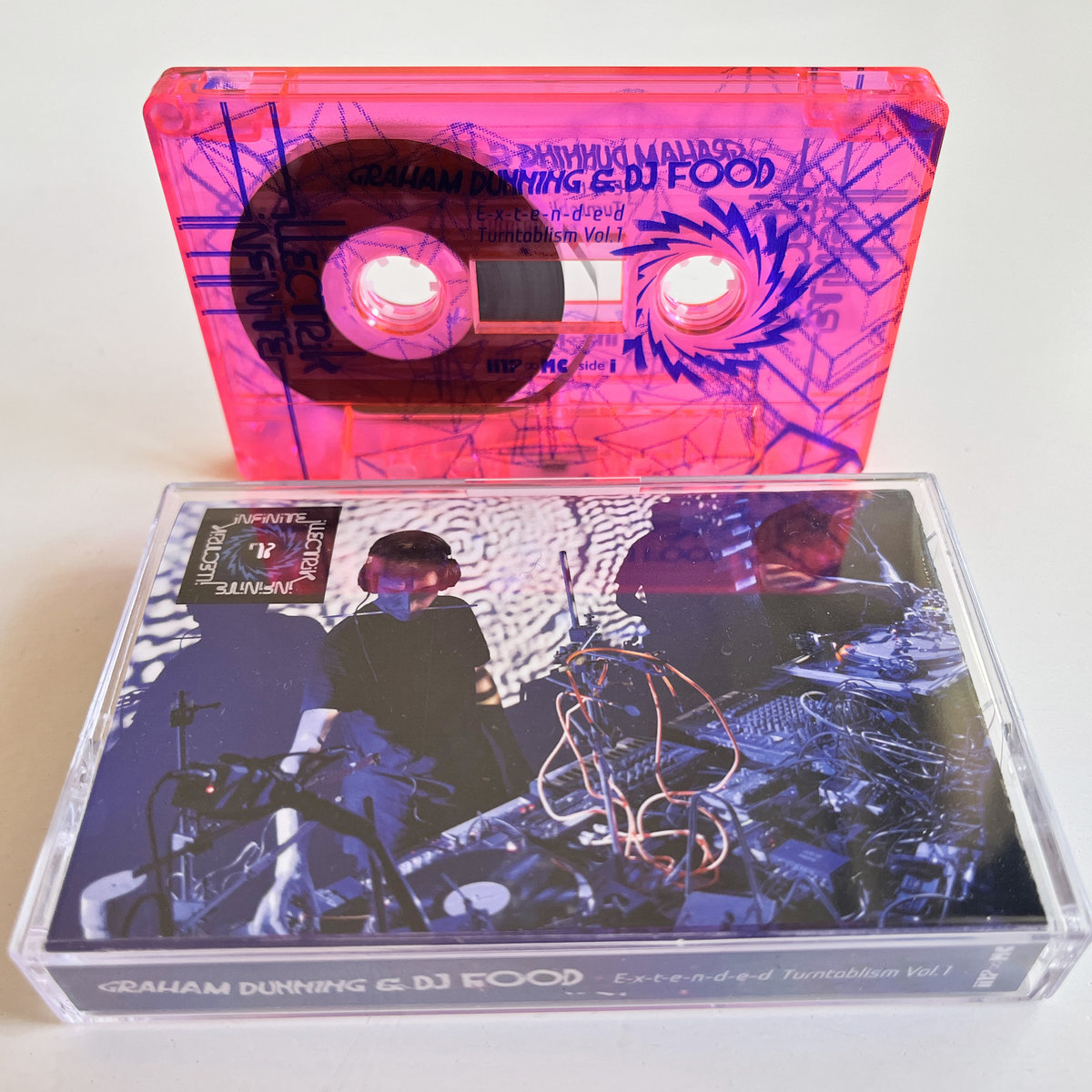
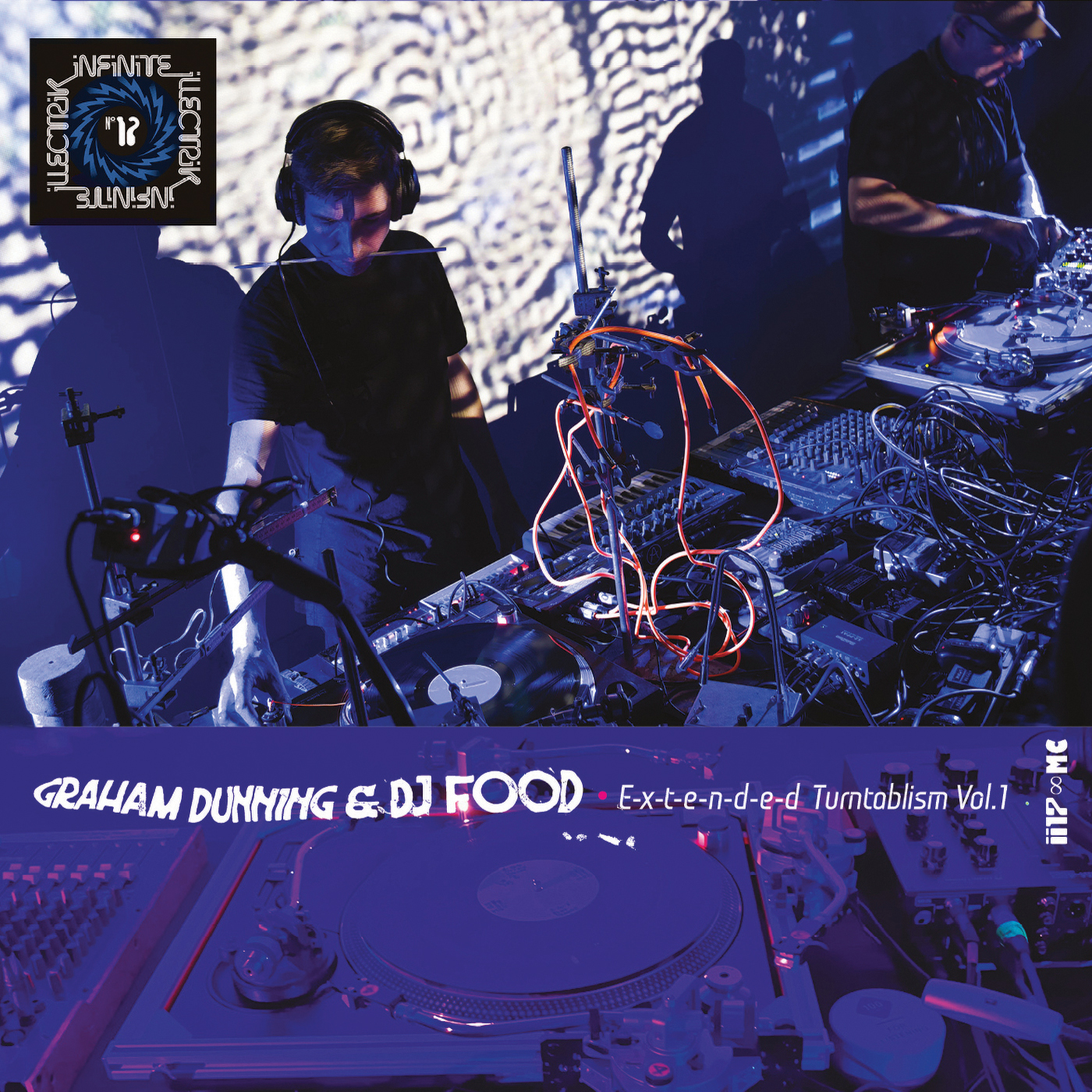
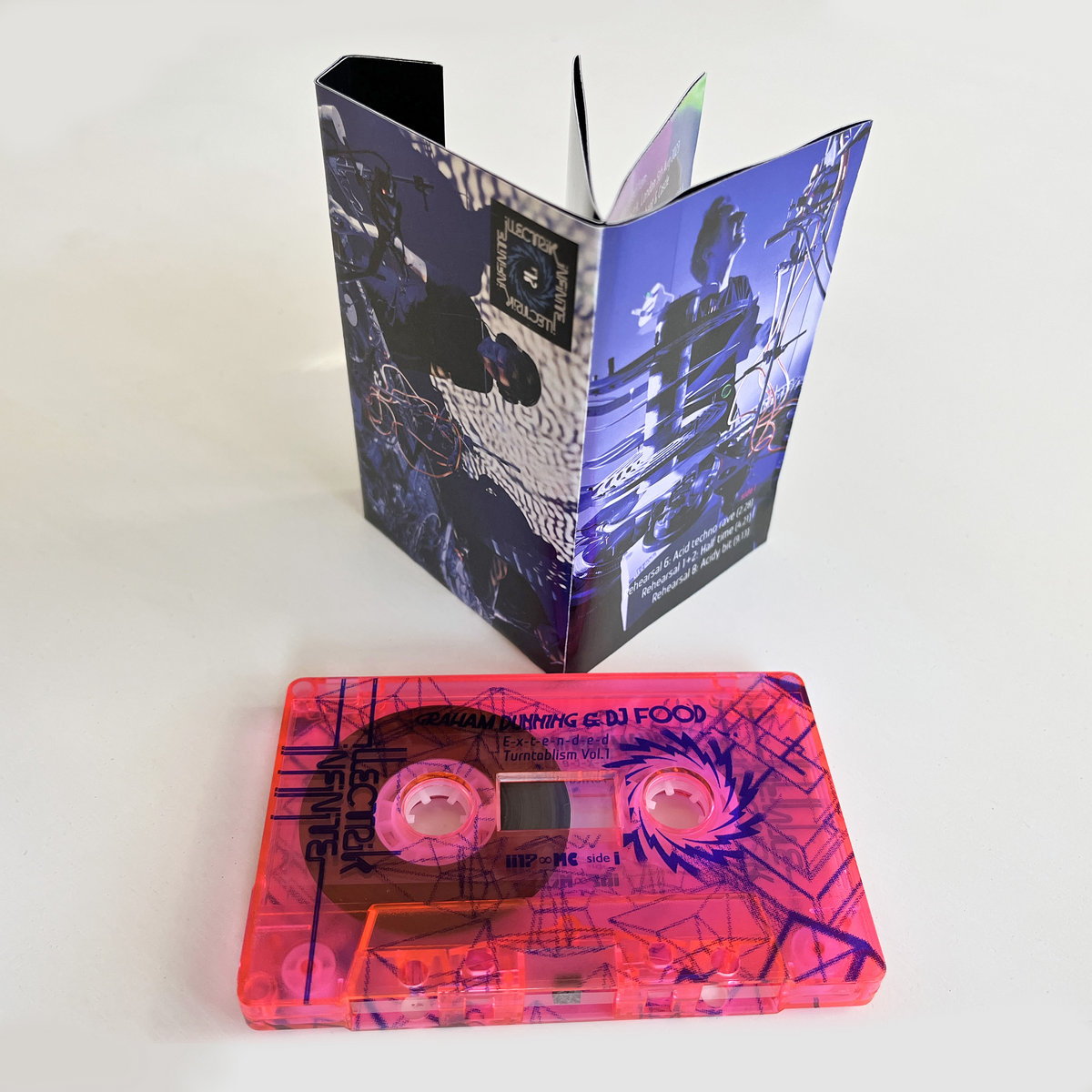
The first gig with Kev was for Robin The Fog’s festival at Iklectik in 2023. Since then we have played a handful of shows, including at a gallery in Bratislava (pictured), a festival in Bedford and an iMax in Bristol. This new tape features edits from that first live show and a bunch of rehearsals in between. I’ve also written about the project in my PhD, which I hope to be able to share soon. Kev’s design for the tape is amazing, and includes some of the visuals from PuttyRubber and Chromatouch, and photos by Keith de Mendonca, Mark Van der Vord, Peter Williams, Mike Letchford, w.ith.lasers and Jason B.
Grab a coyp here: https://grahamdunningdjfood.bandcamp.com/album/e-x-t-e-n-d-e-d-turntablism-vol-1
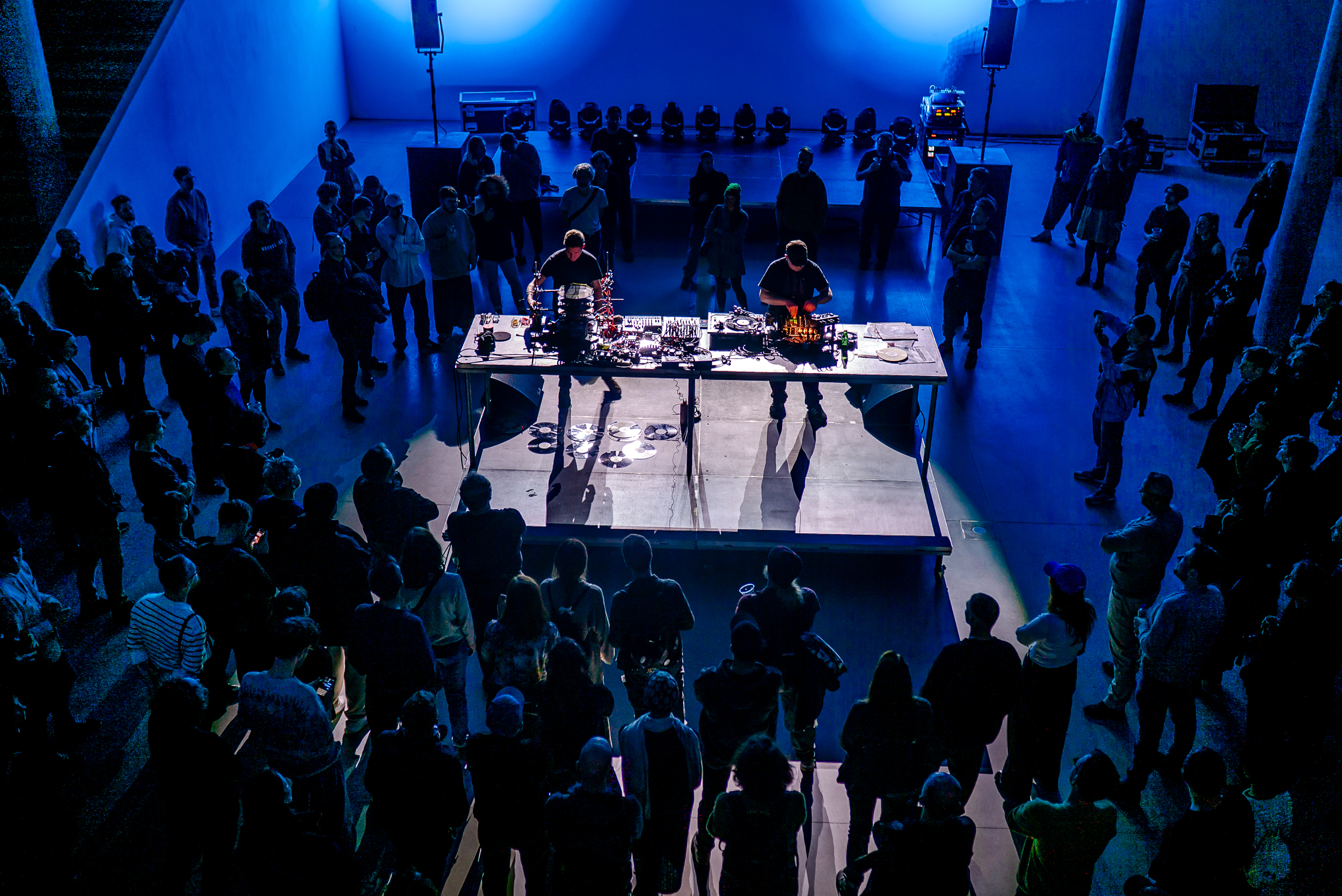
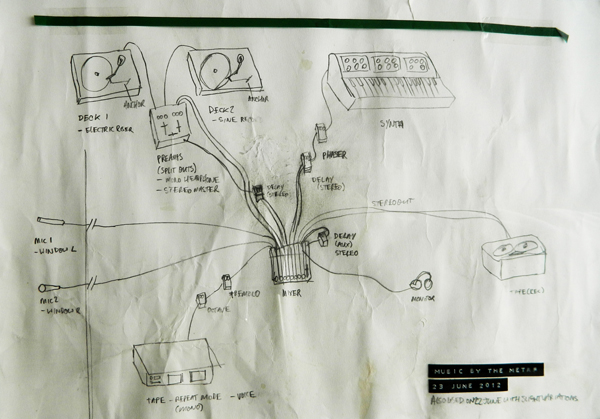
An improvised rhythmical collage of sound and samples from two e-x-t-e-n-d-e-d turntables. First billed as a ‘modified turntablism soundclash’ the collaboration was conceived somewhat like a back-to-back dance music DJ set, but with two modified turntable systems rather than a standard DJ setup. Graham uses his Mechanical Techno contraption, a tower of modified records and mechanical triggers. DJ Food uses his Quadraphon four-armed turntable with locked groove records.
Graham Dunning is a musician, instrument designer and artist working with sound. His work explores sound as texture, timbre and something tactile, drawing on bedroom production, tinkering and recycling found objects.
grahamdunning.com
DJ Food has been working with turntables for 40 years. His custom-made four-armed Quadraphon deck enables him to bridge the gap between live improvisation and a club DJ set.
http://www.djfood.org
Releases Friday 6th February
73 min cassette tape with 8 page fold out mini-zine insert – only 50 copies.
+ download
https://grahamdunningdjfood.bandcamp.com/album/e-x-t-e-n-d-e-d-turntablism-vol-1
Long Term Projects
Some projects run for a long time. Mechanical Techno has definitely been the one I’ve worked on most since beginning it back in 2014 (here’s a timeline). I’ve been collecting found objects most of my life (as discussed in the last post), though I didn’t really think of it as a creative project for a lot of that time. There are different types of long term projects, I think, and I’ve been pondering this recently.
Andrew Hickey’s excellent podcast series, A History of Rock Music in 500 Songs, is a good example of an ambitious project built from the start as a long termer. Each episode discusses just one track, but this often means giving a whole biographical history of the artist or group and typically loads of social and cultural contextual information too. As an example, the excellent discussion of The Velvet Underground’s White Light /White Heat also requires a potted history of John Cage’s work, the birth of American minimalist composition, and Andy Warhol’s Factory. From the first episode the format was set and, indeed the duration: At an average of an episode per week the whole thing should be done in ten years. I’m impressed by Andrew’s big plans and his dedication to the project.
Another ten-year project I came across recently is an in-depth commentated playthrough of the open-world video game Fall Out 4, by The Skooled Zone. Again, the dedication is impressive. Each episode usually revolves round an in-game quest, or part thereof, with Paul dropping bits of interesting trivia, historical facts and vocabulary, as well as gameplay tips. As a fan of the game it’s cosy and compelling watching: I’m about 25 episodes in (there are surprisingly only 72 in the whole series) and I expect I’ll see it through. Whether Paul expected the run to last so long is not clear. He certainly started shortly after the game’s release in 2015.
When I began working on Mechanical Techno, it grew out of some other existing projects, rather than coming to me as an idea fully formed. I’d already been doing stuff with turntables for years, playing with electronic triggers from drums and other sources, assembling record players and loops to form self-playing music machines, and making dub mixdowns of the output of the assemblages. Mechanical Techno felt like a natural progression to what I was already doing, rather than the start of something totally new. I also had no idea I’d still be gigging, recording and collaborating with it a decade later, and indeed writing a PhD about it. How long the project will continue I don’t really know. Just as I never really planned for it to begin, I have no plans for it to end. It’s likely it will morph into something new – either an iteration of the same project or something distinct. My current plans are to focus on the machine’s unique effects to make some new kinds of music. Extrapolating from the ‘music that sounds a bit wrong’ I’ve been making, to try to make something more alien and angular. It’s in my head as a direction but, as I’ve often found in the past, what actually comes out at the other end might be completely different.
I’m currently reading Tilman Baumgärtel’s book on the history of the loop, Now and Forever. Apart from kicking myself I hadn’t got round to this during my PhD research (I may still mention it in my corrections) I’m enjoying it and getting a lot from it. Reading more detail about Pierre Schaeffer’s locked groove turntable experiments is fascinating – not only is it very relevant to my own work, particularly considering the turntable’s innate capacity for creating rhythmical loops, but also the clear descriptions of the processes from Schaeffer’s diary are really illuminating. And it’s a perfect example of the kind of self-perpetuating long-term project I’m thinking of. Beginning with experiments almost for their own sake, Schaeffer explored the materials, functions and affordances of the technology and the sounds themselves, following the flows and the signposts and just discovering along the way. Musique Concrète seems like such a well considered and perfectly formed approach and set of concepts that it must have been mapped out in advance, a lifetime’s work. But digging into the the processes at play and Schaefer’s contemporaneous self reflections shows the way in which it grew over time.
One thing I found difficult during the main part of the PhD study was trying to stay on track. When I’m feeling at my most creative I’ll have lots of ideas for kernels of projects or starting off points, often relating to a simple practical experiment, and have a strong urge to follow where they lead. Each has the potential to become a long-term project, though most won’t ever get past the testing phase. Now I’m close to submitting the final version of the thesis I’m looking forward to pulling on some of the threads I left behind.
Collecting a whole deck of cards (by finding them on the street)
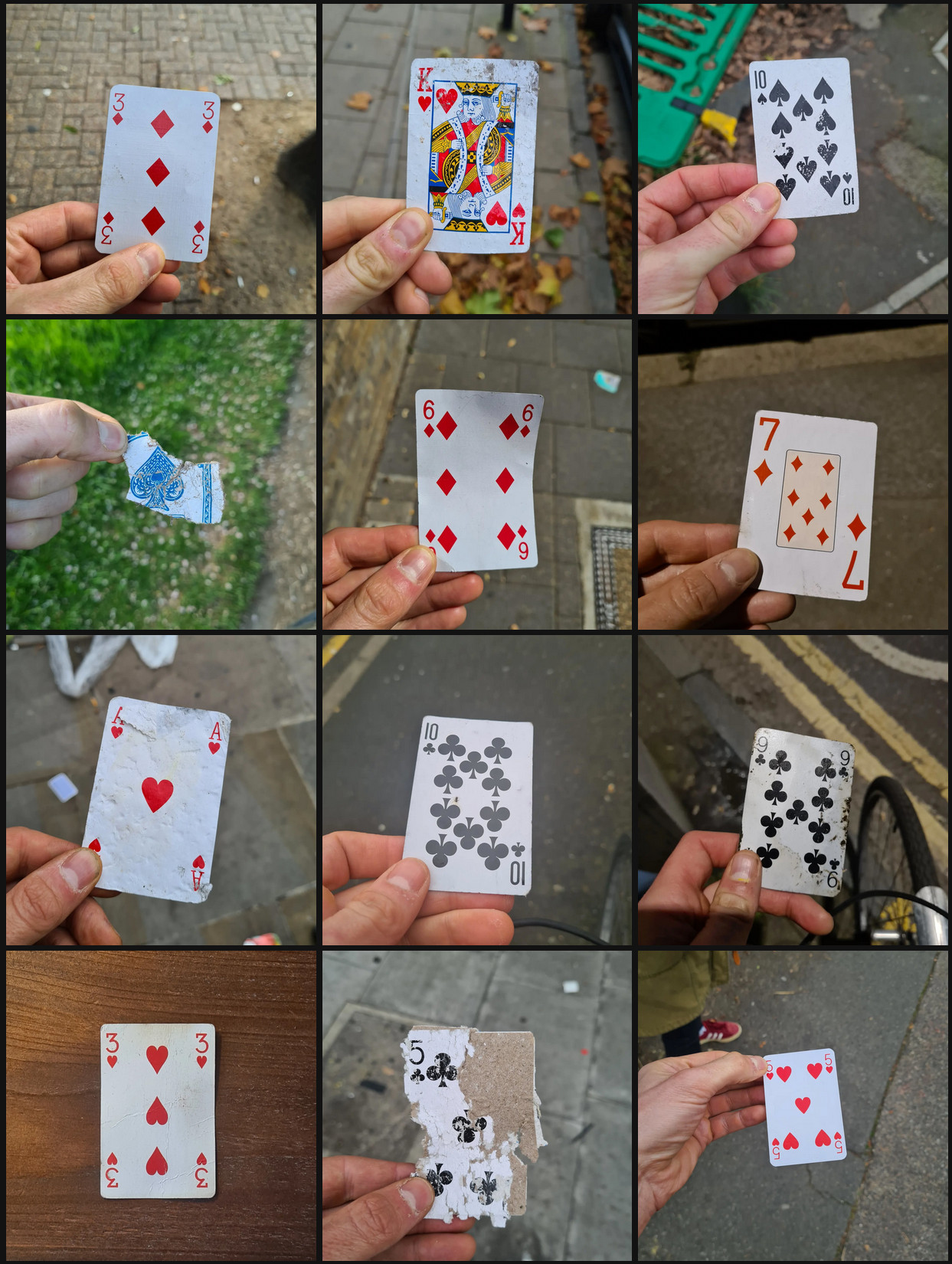
Picking things up in the street has been a habit since I was a child. I always had pockets full of nuts and bolts and other interesting bits and bobs I’d collected. When I started compiling sketch books for visual research around 2008/9 a lot of found objects ended up in there, with the occasional playing card. Since 2021 I have been collecting playing cards more deliberately, logging the date and location of discovery. It’s a fun and quite silly project, and I enjoy the ridiculousness of tracking it in a spreadsheet. I’ve just set up a proper page for the project, here, which includes my rules for the game.
Each time I add a card to the collection I take a photo of it too. And I have been posting these on instagram. I’m posting now as I plan to shift this over to my blog instead – makes much more sense to keep the archive in one place on the website. In future I’ll do a quick post here whenever I get a new card – typically it’s every few months, so these posts won’t swamp the feed.
The time in between each finding is quite interesting to me. Estimating at an average of about three months between each allows me to make a guess of how long this process might take. The project is a classic example of the “coupon collector’s problem” as explained really well by this Stand Up Maths video. The problem is that the probability of finding a card that you actually need goes down with each card added to the collection. So, the likelihood of picking up a card only to find it’s a duplicate. Using the maths from Matt’s video I calculated I should have completed the collection in about 25 years. So, when I’m in my mid 60s. This is very much a long-term project.
Collaborators and London venues lists – mostly for me
I’ve updated the links page on the website today with two things: a list of most of the people I have collaborated with (and, in some cases, continue to work with) and a list of local venues I often go to.
As I move away from commercial social media, I’m trying to find ways to keep connections and networks visible and viable. The site doesn’t have a “blogroll” as such, but this serves as an alternative: a way to link through to people I’ve worked with and whose work I want to promote. I may add a little more info about each, a few words biography or description perhaps, but also want to try and keep things minimal. I expect I’ll also find this page useful for myself when mentioning people in posts and wanting to link through to their sites.
I put together the venues list for another reason. London is so busy with stuff happening that you have to get used to the sense of FOMO: you can’t see everything you want to, totally spoilt for choice, so have to pick your battles. Occasionally, like today, I find myself with a spare evening and want to find a gig or event to go to. There’s no centralised place for listings now – where I might once have browsed a paper copy of Time Out or, later, searched on facebook, I now find myself clicking through loads of individual venues’ and promoters’ listings to find events. Which is fine. The centralised platforms inevitably fill up with spam, rubbish you’ve no interest in, or miss out most underground stuff which doesn’t engage with it. This list of links is really for me to be able to find stuff quickly. I’ll endeavour to keep it updated. It may also be useful to point out-of-town visiting friends to when they’re looking for something (mainly why I included the location info on the venues list).
The intention of both lists is to be useful as a resource, mainly for myself but perhaps for one or two others too.
A new home for the Mammoth Beat Organ
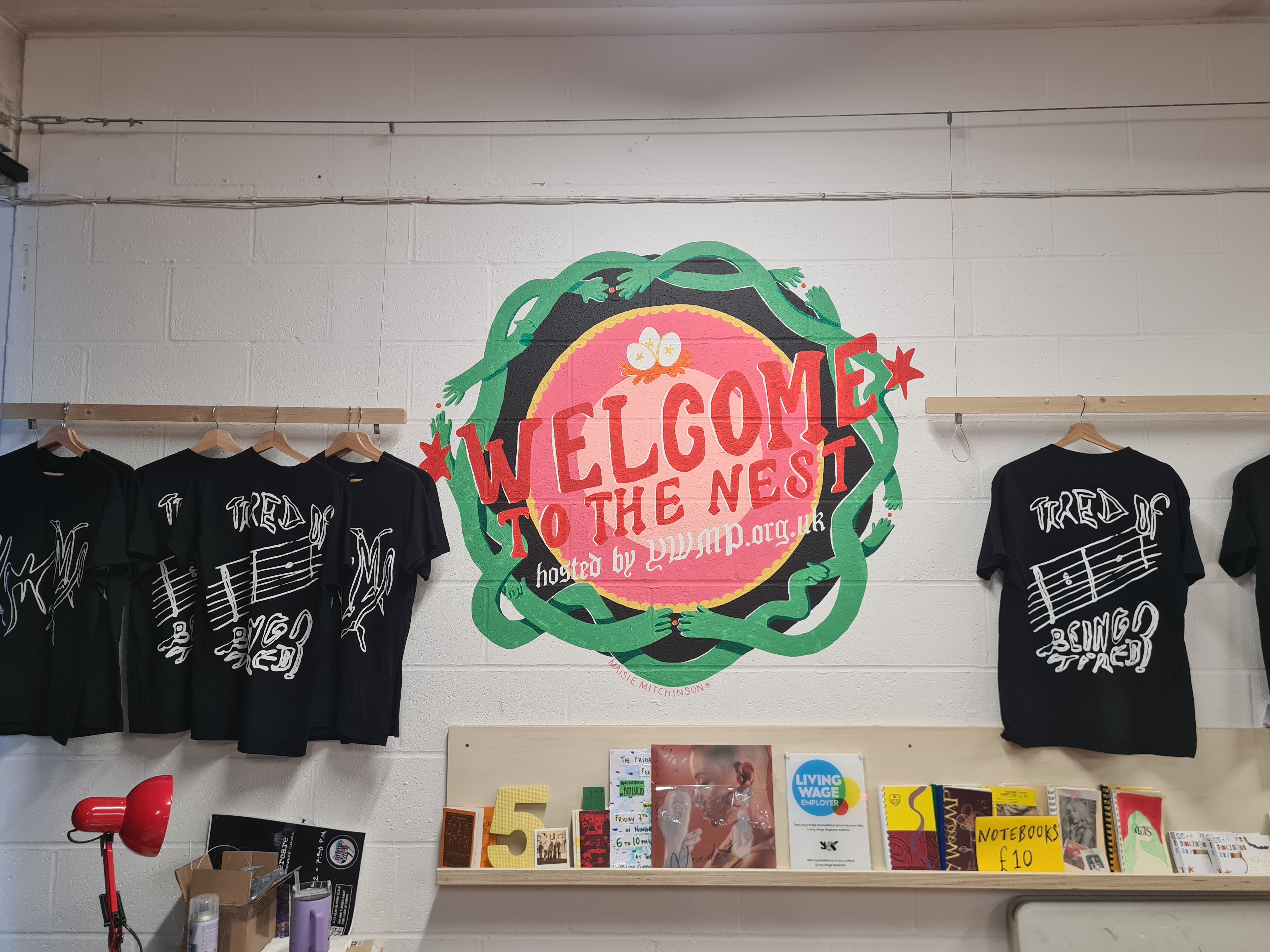
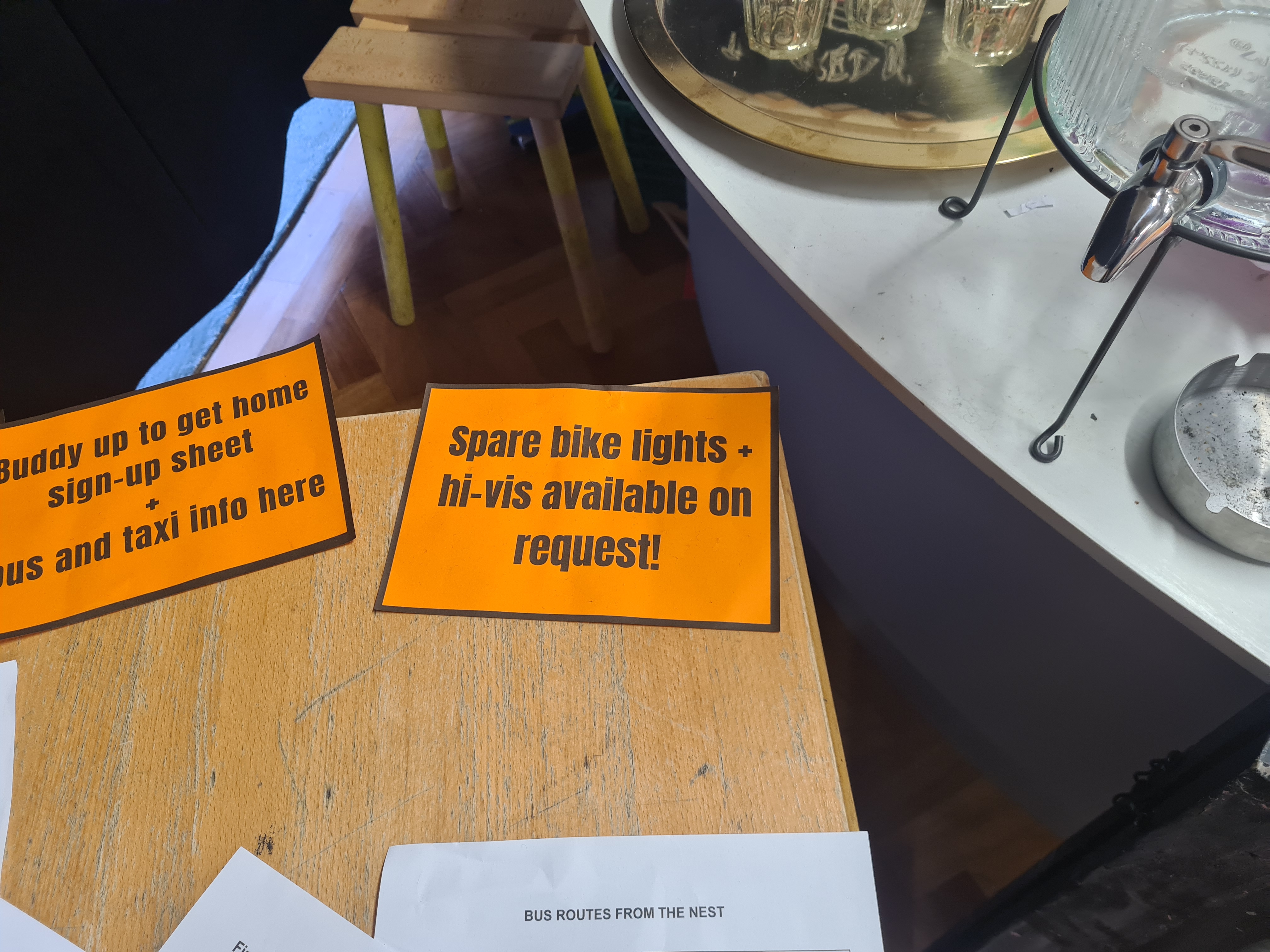
This weekend I visited The Nest in Oxford, which is the new home for the Mammoth Beat Organ, to show the custodians the ropes and make some mechanical noises. The Nest is a “wholly inclusive space for young people wanting to express themselves through music,” based centrally in Oxford in a formerly empty shop space and ran by YWMP. Since getting set up in the space in mid-2025 they’ve hosted over 30 gigs, plus weekly hangouts, various courses and recording sessions. They have an active Safer Spaces policy to encourage accessibility and engagement from people who are underrepresented in music, and evidence of this can be seen in the space, including very visible safety protocols and things like free bike light and hi-vis hire and lift-sharing so people can get home safely.
The Mammoth Beat Organ is a big mechanical musical instrument, it takes up a lot of space. It was formerly kept in Sam Underwood’s workshop where we built it together. Sam and Beck have recently sold their house and alll their belogings to travel the world by bicycle – you can follow their progress at bimblingbybike.com – so the MBO became homeless. YWMP are kindly looking after it, with the plan to get some young people using it to make beats, drones and scraping noises – exploring the world of experimental mechanical music.
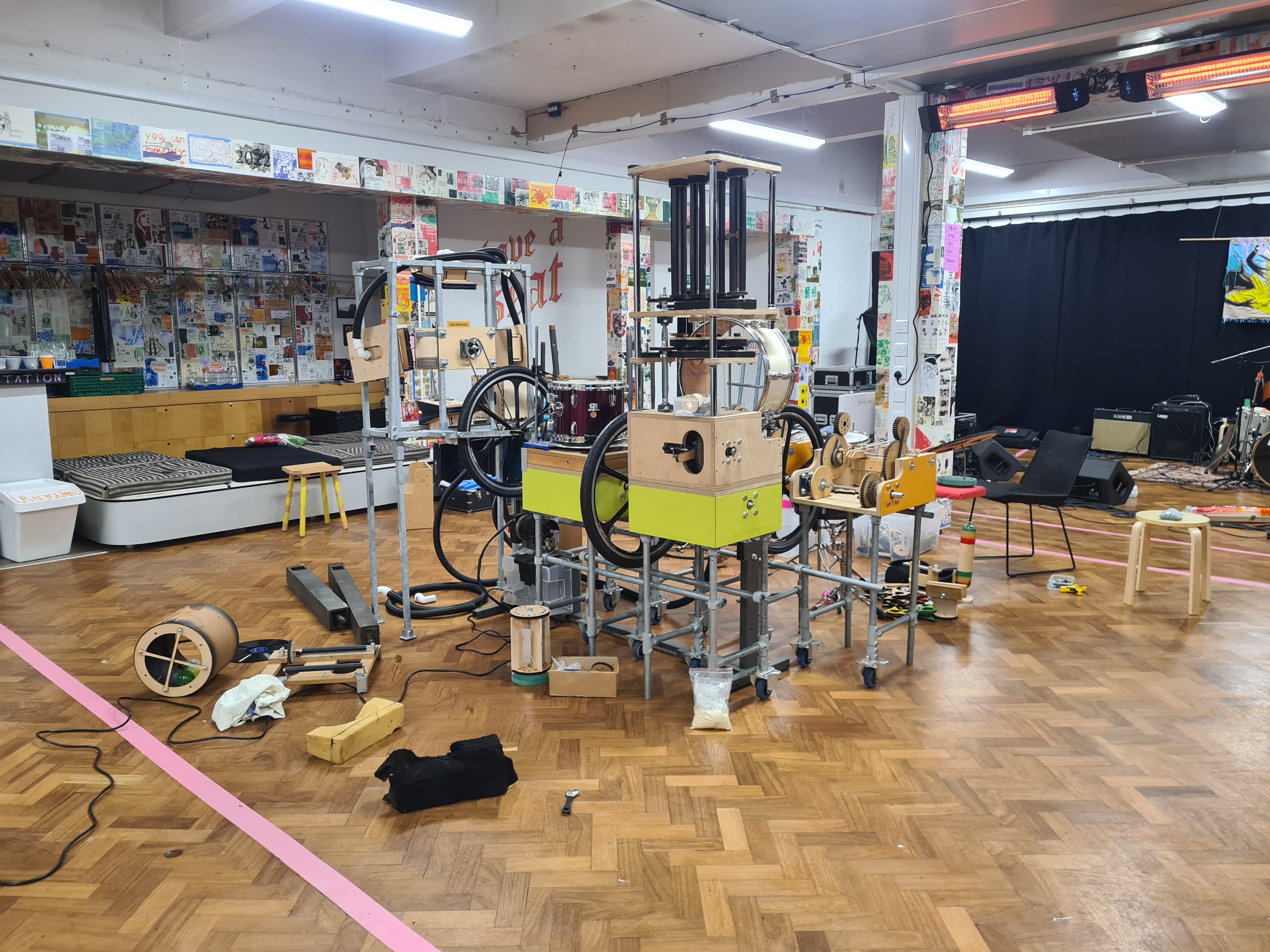
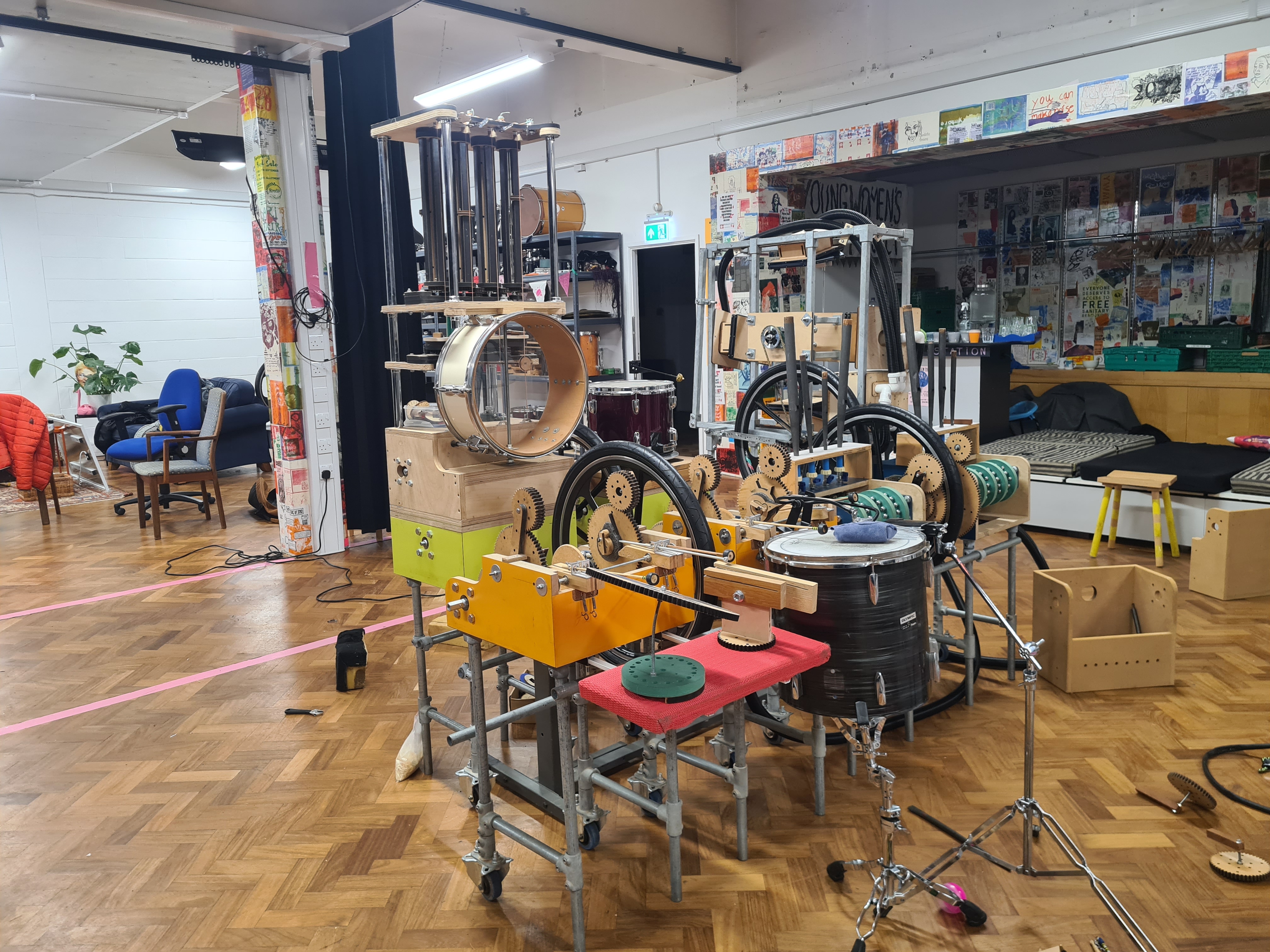
Me and two of the staff at The Nest started the day building the MBO. Though it’s big it’s designed to be somewhat portable, and various parts can be dismantled. Having assembled the parts and got everything in position we started the motor and everything was working fine. The drum module is possibly the most complex, with different gearing for different time signitures, a variety of cams in divisions of 4/8/16, 8 / 7 / 5 etc., and a load of different beaters to choose from. The air sequencer module has its own ideosyncracies too, and needs to be connected to the bellows (or a big pink balloon) in order to play. Swapping round organ pipes is a nice way to create variation in patterns, and as an unusual way of interacting with a sequencer is perhaps not the most intuitive way to play an instrument. The various noise makers – tombola, drone drum, rotating bin – on the utility module all required their own explanations. And finally the bass banjo with various different pluckers, hurdy-gurdy wheels and dampners.
I’ve got a few video clips to share which I’ll post here once I have time to edit them together. Hopefully the Nest crew will keep me updated with any future MBO activities, which I’ll share here too.

